

You paid to have your bathtub refinished, and now it looks new again. What you do over the next few days, and the next few years, largely decides how long it stays that way. A refinished tub is not fragile, but it is a coated surface that rewards gentle care and punishes a few specific habits. This guide covers exactly how to look after one: how to clean it, what to avoid, how to head off chips and peeling, and when a problem is one you should hand back to a professional. The single most important rule, if you take nothing else away, is to follow the written aftercare instructions your refinisher gives you, because those are specific to the coating that is actually on your tub.
What Changes After Your Tub Is Refinished
The surface you are now caring for is a professionally applied coating over the original tub, not the original factory finish. That distinction matters for cleaning, because the products and habits that a bare porcelain or fiberglass tub might have tolerated are not automatically right for a fresh coating. Different coating systems can carry different manufacturer care instructions, so the most reliable guidance is always the aftercare sheet from your refinisher plus the coating manufacturer’s documentation, not general internet advice. The principles below hold broadly, but where your provider’s written instructions differ, theirs win.
When Can You Start Using and Cleaning the Tub Again?
There are two clocks here, and mixing them up is a common early mistake. The first is when you can use the tub at all after refinishing. The second is when and how you begin routine cleaning.
On use, the finish needs to cure before the tub goes back into service. Quality Bathtub Refinishing generally advises waiting about 24 to 48 hours after the coating cures before using the tub, though the exact time depends on the specific coating system, so follow the timing your refinisher gave you. Using the tub too early is one of the leading causes of a finish bubbling or failing to bond, so this wait is worth respecting exactly. Our guide to refinishing aftercare and curing explains the first days in detail.
On cleaning, hold off on scrubbing a brand-new finish beyond the gentlest rinse for the first stretch after curing, and follow your refinisher’s guidance on when normal cleaning can begin. A finish that has cured enough to use is not necessarily ready for aggressive cleaning products on day one.
How to Clean a Refinished Bathtub
Routine cleaning of a refinished tub is simple, and simple is the point. A gentle approach done regularly beats an aggressive scrub done occasionally.
A reliable routine looks like this:
- Rinse the tub with water after use to move soap and residue off the surface before it can build up.
- For regular cleaning, use a soft cloth, sponge, or microfiber with a mild, non-abrasive cleaner.
- Wipe rather than scour. Let the cleaner do the work instead of pressure.
- Rinse thoroughly and wipe the surface dry to limit water spots and residue.
The theme running through all of that is non-abrasive and gentle. A refinished surface is smooth, and keeping it that way is mostly about not grinding it down over time. The specific cleaner that best suits your finish is something your refinisher can name for the coating they used, which is more reliable than any general recommendation.
How Often Should You Clean It?
There is no single correct frequency, because it depends on how the tub is used. A tub used daily by a busy family, or one in an area with hard water that leaves mineral spotting, needs more frequent light cleaning than a guest bathroom used once a week. The useful principle is to clean lightly and often rather than rarely and hard. Frequent gentle wiping prevents the soap scum and mineral buildup that otherwise tempt people into aggressive scrubbing, which is the thing that actually harms the finish. In other words, regular easy cleaning is partly a strategy to avoid ever needing the harsh cleaning that damages a coating.
Products and Methods to Avoid
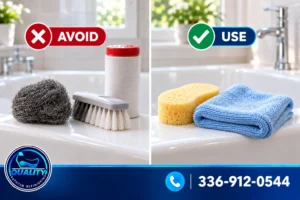
This is where a refinished tub differs most from an ordinary one, and where most preventable damage comes from. Rather than declaring any single product universally forbidden, since coating systems vary and your refinisher’s instructions are the authority, it helps to understand the categories of risk and why they matter.
Abrasive cleaners and scrubbing tools are the biggest one. Scouring powders, gritty cleansers, steel wool, and stiff or abrasive scrub pads physically wear and scratch a coated surface. Over time that dulls the finish and can open the door to bigger problems. This is one of the most common causes of avoidable wear on refinished tubs.
Harsh chemicals are the second category to be cautious with. Strong or acidic cleaners, and heavy-duty bathroom chemicals, can affect a coating differently than they affect bare porcelain. Because different coating systems tolerate different things, this is exactly the area where you should defer to your refinisher’s written instructions rather than assume a product that worked on your old tub is fine on the new finish. If you are unsure about a specific cleaner, the safe move is to ask your refinisher or check the coating manufacturer’s guidance before using it.
Aggressive physical habits round it out: standing on the tub floor with hard shoes, dropping heavy or sharp objects, or dragging bottles and metal caddies across the surface. A coating resists normal use but not impacts and gouges.
Preventing Scratches, Chips, and Premature Wear
Most damage to a refinished tub is preventable, and the prevention is mostly about small daily habits:
- Do not let cleaning tools escalate. If soap scum is building up, increase gentle cleaning frequency rather than reaching for something abrasive.
- Lift, do not drag. Set shampoo bottles and caddies down instead of sliding them across the surface, and avoid metal containers that can scratch.
- Be careful with heavy objects. A dropped bottle can chip a coating the same way it could chip enamel.
- Rinse after use so residue does not harden into buildup.
- Address a small chip early rather than letting it spread or letting water work under the finish.
None of this is demanding. It is mostly about not doing the few things that cause damage, rather than doing anything special.
Soap Scum, Hard Water, and Staining
Buildup is the everyday reality of any bathtub, and a refinished one is no different in what accumulates, only in how you should remove it. The safe approach is consistent: tackle soap scum and hard-water spotting with gentle, non-abrasive cleaning done regularly, so deposits never get thick enough to feel like they need scouring. Parts of North Carolina have harder water than others, and hard water leaves more mineral spotting, so if you notice persistent spots, the answer is more frequent light cleaning and prompt drying, not a stronger, harsher product. When buildup has genuinely gotten ahead of you, ask your refinisher what they recommend for their coating rather than experimenting with heavy-duty removers that might affect the finish.
Caulk, Seams, and Water Exposure

One maintenance point that gets overlooked is the caulk line where the tub meets the wall or floor. Caulk is not part of the refinished surface, but it protects the areas around it. When caulk cracks, shrinks, or pulls away, water can get behind and beneath surfaces, and persistent water intrusion becomes a problem over time. Keeping the caulk intact, and having it redone when it deteriorates, is a simple habit that protects both the tub area and the finish at the edges. This is maintenance, not repair: the point is to keep water where it belongs, not to attempt structural fixes yourself.
What to Do If the Finish Gets Damaged
If you notice a chip, a scratch that has broken the surface, an area starting to peel, or a spot where the finish looks compromised, the right first move is to stop cleaning that area aggressively. Scrubbing at a failing spot usually makes it worse and can let water work underneath. A refinished surface can often be repaired or touched up by a professional, and catching a small problem early is far cheaper and easier than dealing with widespread peeling later.
This is also where the warranty matters. Quality Bathtub Refinishing backs its work with a written warranty, so if a problem appears, reviewing that coverage and contacting the refinisher is the sensible path rather than a DIY patch that may not match or bond. If you want the surrounding surfaces refreshed at the same time as a touch-up, the same team also handles shower, sink, countertop, and ceramic tile refinishing.
How Maintenance Affects How Long the Finish Lasts
Care is one of the biggest levers on lifespan. Quality Bathtub Refinishing states that a professionally refinished tub can last around 10 to 15 years with proper care. That figure is care-dependent, not a guarantee: actual lifespan varies with the substrate, the coating system, the quality of the original preparation and application, how heavily the tub is used, and, importantly, how it is cleaned and maintained. A tub kept to gentle, non-abrasive cleaning and protected from impacts sits at the favorable end of that range. A tub scrubbed with abrasives and harsh chemicals can wear out much sooner. In practical terms, the maintenance habits in this guide are not just about keeping the tub looking good; they are what let the finish reach the years it is capable of.
A Simple Maintenance Checklist
- After each use: rinse the surface and wipe it dry when practical.
- Weekly, or as needed for your household: clean gently with a soft cloth or sponge and a mild, non-abrasive cleaner, then rinse and dry.
- Ongoing: keep abrasives, gritty pads, and harsh chemicals off the surface; set items down rather than dragging them; avoid dropping heavy objects.
- Periodically: check the caulk line and have it redone if it cracks or pulls away.
- If damage appears: stop scrubbing the spot, and contact your refinisher about repair and warranty coverage.
- When in doubt about a product: follow your refinisher’s written aftercare instructions rather than a general online tip.
Keep the aftercare sheet your refinisher gave you somewhere you can find it. It is the most accurate maintenance document for your specific tub.
Frequently Asked Questions
How do you clean a refinished bathtub?
Use a soft cloth or sponge with a mild, non-abrasive cleaner, wipe rather than scour, then rinse and dry. The guiding principle is gentle and regular. For the exact cleaner best suited to your finish, follow the aftercare instructions your refinisher provided.
How often should you clean a refinished tub?
It depends on use. A daily family tub or one in a hard-water area needs more frequent light cleaning than a rarely used guest tub. Cleaning gently and often is better than scrubbing hard occasionally, because it prevents the buildup that leads to aggressive cleaning.
Can you use abrasive cleaners on a refinished bathtub?
No. Scouring powders, gritty cleansers, steel wool, and abrasive pads physically wear and scratch a coated surface, and this is one of the most common causes of avoidable damage. Stick to soft cloths or sponges and non-abrasive cleaners.
Can you use bleach or harsh chemicals on a refinished tub?
Be cautious, and follow your refinisher’s instructions. Coating systems differ in what they tolerate, so a harsh or acidic cleaner that was fine on your old tub is not automatically safe on the new finish. If you are unsure about a specific product, ask your refinisher or check the coating manufacturer’s guidance first.
Can a refinished bathtub scratch or chip?
Yes. A coating resists normal use but can be scratched by abrasives or chipped by dropped heavy objects. Most of this is preventable with gentle cleaning and a little care around the tub.
How long can a refinished bathtub last with proper care?
Quality Bathtub Refinishing states around 10 to 15 years with proper care. That range depends on the coating system, the original preparation and application, how the tub is used, and how it is maintained, so good care pushes it toward the higher end.
What should you do if a refinished tub gets chipped?
Stop cleaning that area aggressively, and contact your refinisher. Small chips are often repairable, and catching them early prevents spreading or water getting under the finish. Check your warranty coverage as well.
Can you use a bath mat on a refinished bathtub?
Suction-cup bath mats can mark or pull at a finish if they are left in place constantly, since they trap moisture and grip the surface. If you use one, lift and dry it between uses rather than leaving it stuck down, and follow any specific guidance in your refinisher’s aftercare instructions.