Why is my bathtub rusting?
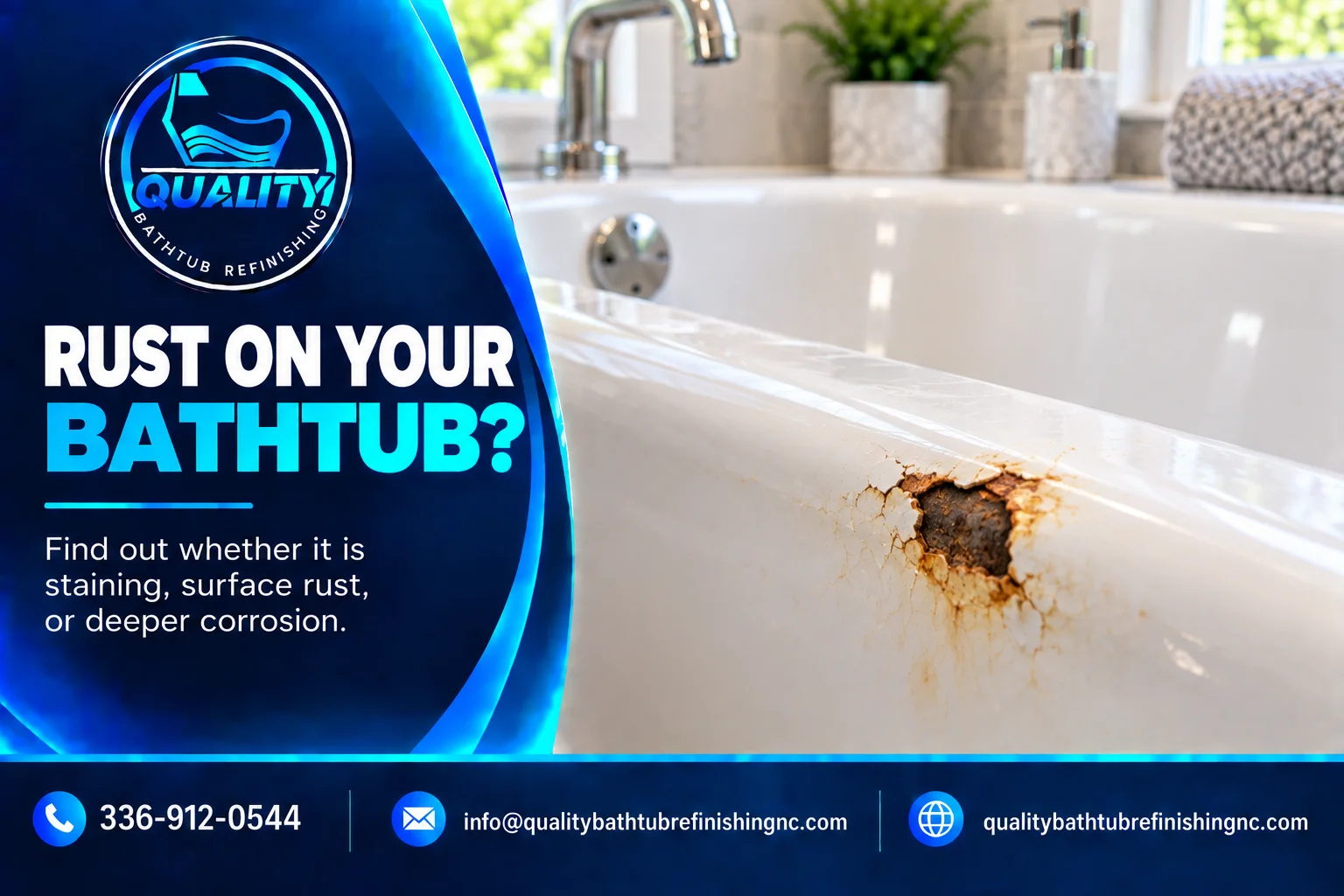
Rust on a bathtub almost always comes back to one thing: iron. Rust is what happens when iron or steel is exposed to moisture and air over time, so a tub that is genuinely rusting usually has an iron or steel component that has become exposed or has begun to corrode. On a bathtub, that most often means a steel or cast iron tub where the protective enamel surface has been chipped, worn, or damaged, letting moisture reach the metal beneath.
That said, the first and most useful thing to sort out is whether what you are looking at is actually rust at all. Homeowners understandably use “rust” for any orange or brown mark in a tub, but those marks do not all mean the same thing, and the right response depends on which one you have. This guide is specifically about rust and corrosion, distinguishing it from staining, explaining why it happens, whether it can be addressed, and when a rusty tub has reached the point where replacement is worth considering. For the full range of tub damage types, our guide to bathtub surface damage covers the broader picture.
Is it rust, a stain, or corrosion?
This distinction is the most important one in the whole guide, because these look similar and mean different things. Homeowners may use “rust” to describe any of the following:
- Orange or brown discoloration that sits on the surface.
- Rust staining, where iron from another source (hard water, an old fixture, a metal can left on the surface) has left a mark, but the tub itself is not corroding.
- Actual corrosion, where the tub’s own metal is rusting.
- Exposed metal, where a chip or worn spot has revealed the substrate.
- Corrosion beneath a damaged coating, where rust is developing under the surface.
Two cautions follow from this. First, do not assume every orange or brown stain is active corrosion of the tub. A rust-colored stain can come from water or an external metal object and may be a cleaning matter rather than a repair one. Second, and equally important, do not assume that visible rust is only cosmetic, because a stain sitting over exposed or corroding metal is a different situation. Determining which of these you actually have often requires a closer look, and you generally cannot tell the material or the severity from the color alone. That uncertainty is exactly why an assessment is useful when rust is involved.
Where does bathtub rust usually appear?
Location can offer clues, though it does not establish the cause by itself. Rust and rust-colored marks commonly show up in a few places: around chipped or damaged enamel where the metal beneath may be exposed, in worn areas, around the drain, around the overflow, anywhere metal is exposed, and in spots that stay wet for long periods. The logic is straightforward: rust needs exposed iron or steel plus moisture, so the places where the surface is broken or where water lingers are the places where genuine corrosion is more likely. None of these locations is universally responsible for rust, and a mark in one of them is not proof of corrosion, but they are the areas worth looking at closely, and the areas a professional will check first.
Surface rust vs. deeper corrosion
Rust is not one condition but a range, and where a particular case falls on that range matters a great deal for what can be done about it. A homeowner may encounter anything from surface staining, to light surface rust, to localized corrosion, to pitting, to more advanced loss of the metal itself. The important idea is that superficial discoloration is a different matter from pitting or material loss. Surface staining or light surface rust is, broadly, the more manageable end. Pitting, where the metal has started to be eaten away, and advanced material loss are more significant, because they involve the tub’s actual material rather than just its appearance.
This guide will not invent a grading system with neat categories, because rust does not sort itself that cleanly and any such system would imply more precision than is honest. The one thing worth stating plainly is a limit on what you can judge yourself: you cannot determine the remaining thickness of the metal or the tub’s structural integrity simply by looking at the surface. A small rust spot can sit over sound metal, or over metal that is thinner than it appears. That hidden dimension is why deeper corrosion is a professional-assessment situation rather than a look-and-decide one.
What causes bathtub rust?
The underlying cause is iron or steel meeting moisture, but the practical triggers on a bathtub usually trace back to the protective surface being compromised. Common contributors include a chip or crack that has exposed the metal beneath an enamel surface, general wear that has thinned or broken the surface, persistent moisture in one area, a damaged or failed previous coating, and, in older tubs, long-term deterioration. On steel and cast iron tubs, the enamel is what keeps moisture off the metal, so once that barrier is broken, the exposed metal can begin to corrode. The cause is worth understanding because addressing rust without addressing why the metal was exposed tends to lead to the rust returning, a point the later section on recurrence returns to.
Does the bathtub material matter?
Very much so, and with rust the material question is not a detail, it is the whole thing, because only some tub materials can actually rust. Identifying the material comes first. For the fuller material-by-material picture, see our guide on determining whether a tub can be refinished.
Steel and enamel tubs
Enameled-steel tubs have a steel body under an enamel surface. Where that enamel is chipped, worn, or damaged and the steel is exposed, the steel can be vulnerable to corrosion. Because the steel body is relatively thin compared with cast iron, corrosion on a steel tub is worth taking seriously once it involves the metal itself.
Cast iron tubs
Cast iron tubs also have an enamel surface, over a heavy iron body. It helps to consider the enamel surface and the underlying iron separately: damage to the enamel is a surface matter, while corrosion of the exposed iron is a material matter. The iron body is substantial, which is one reason these tubs are often worth restoring, but exposed, corroding iron still needs to be addressed rather than simply coated over.
Porcelain and enamel surfaces
A word on terminology: “porcelain” on a bathtub usually refers to a porcelain-enamel surface over a metal body, not a tub made entirely of porcelain. That matters here because rust on such a tub is really about the metal beneath the enamel, not the enamel itself. Being precise about this avoids the mistake of thinking the surface material is what is rusting.
Fiberglass tubs
Fiberglass does not rust. It contains no iron or steel to corrode, so a fiberglass tub cannot rust the way a metal tub can. If rust-colored marks appear on a fiberglass tub, the source needs to be investigated rather than assumed: the color may come from hard water, a metal object, a fixture, or something else entirely, not from the tub corroding. Where a fiberglass tub has genuine damage that needs repair, that is a separate matter, and fiberglass tub repair is the relevant service, but rust-colored staining on fiberglass is not the tub rusting.
Acrylic tubs
The same applies to acrylic. Acrylic does not rust, so rust-colored staining on an acrylic tub points to an external source rather than corrosion of the tub. As with fiberglass, the staining is worth tracing to its origin rather than being treated as the tub itself rusting.
Can bathtub rust be repaired?
Sometimes, and the honest answer depends heavily on the material and how far the corrosion has gone. Depending on those factors, addressing rust-related damage may involve any of the following, alone or in combination: cleaning or removing surface rust and staining, treating corrosion, localized repair of the affected substrate, restoring the damaged finish, broader refinishing of the surface, or, where the underlying metal is too compromised, replacement. No single one of these is the answer for every tub. A rust-colored stain that turns out to be external may need nothing more than appropriate cleaning, while corrosion that has pitted or thinned the metal is a far more serious situation that a surface treatment will not resolve. Because the right response spans that whole range, a rusty tub is best assessed before anyone commits to a particular fix, and this guide deliberately does not offer chemical recipes for doing it yourself, for reasons covered in the DIY section below.
Bathtub rust repair vs. refinishing
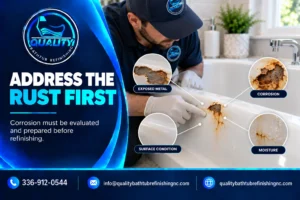
These are different scopes of work, and with rust the distinction is one homeowners often get wrong. Rust repair addresses the rust or corrosion and the affected area, dealing with the metal and the damage. Refinishing restores the broader visible surface finish by preparing it and applying a new coating. The key point, stated plainly: refinishing does not remove rust. Applying a new finish over active rust or exposed, corroding metal does not fix the corrosion; it covers it, and the underlying problem generally continues beneath the new surface.
The realistic relationship is sequential and preparation-driven. If rust has damaged or exposed the substrate, the corrosion and the affected area generally need to be properly addressed and prepared before any new finish is applied. Only once the surface is sound and suitable does refinishing come into play, to restore the appearance across the tub. So refinishing can be part of the eventual outcome, but as a finishing step that follows proper preparation and repair, not as a way to eliminate the rust itself. Refinishing is a surface-restoration process, not a structural repair. Our guide on repair versus refinishing covers that broader relationship.
What a professional should inspect
A careful assessment is what determines whether rust can be addressed durably. There is no single official industry checklist, but the practical things a professional generally considers with rust include the tub material, the location of the rust, the extent of visible corrosion, whether metal is exposed, the condition of the surface, any pitting or material loss, the condition of the surrounding coating, previous repairs, previous refinishing, moisture exposure, the condition of the drain and overflow where relevant, and the overall condition of the tub. Several of these, especially whether the metal is genuinely corroding and how much material has been lost, are difficult or impossible to judge from the surface, which is why rust in particular benefits from a professional look before a plan is chosen.
What happens during professional rust restoration?
At a homeowner level, addressing rust professionally generally follows a sequence something like the one below. These are general industry stages, not a description of any one company’s exact documented procedure, and the specific products, methods, and timings vary by the system used and are not detailed here.
- Inspect the tub and identify the material.
- Determine whether the discoloration is staining, surface rust, or deeper corrosion.
- Prepare the affected area.
- Remove or address the corrosion using a material-appropriate method.
- Repair localized substrate damage if required.
- Prepare the surrounding surface.
- Apply compatible restoration or refinishing materials where appropriate.
- Allow the system to cure according to the product requirements.
- Inspect the finished area.
The two stages homeowners tend to underestimate are the second and fourth: correctly determining whether they are dealing with a stain, surface rust, or deeper corrosion, and then actually addressing the corrosion rather than covering it. Those two steps are what separate a durable result from a cosmetic patch that lets the rust return, and they are the reason rust restoration is more involved than wiping away a stain.
Can you remove bathtub rust yourself?
There is a real distinction here between cleaning and repair. Minor surface staining, especially the rust-colored marks that come from hard water or an external metal object rather than the tub corroding, can sometimes be addressed with appropriate household cleaning methods. That is cleaning, and it is a reasonable thing for a homeowner to try on a light, clearly superficial stain.
Actual corrosion repair is a different matter, and it is important not to confuse the two. A few cautions:
- Distinguish cleaning from repair. Removing a surface stain does not address corrosion of the metal beneath a damaged surface.
- Do not mix cleaning chemicals. Combining certain household cleaners can produce dangerous fumes.
- Do not use industrial acids or hazardous refinishing chemicals to try to strip or treat rust. Some products used in surface refinishing carry serious health hazards, and authoritative bodies including the EPA, OSHA, and NIOSH have published safety information on hazardous chemicals used in bathtub refinishing.
This guide does not provide chemical recipes, acid treatments, or rust-converter formulas, because getting those wrong carries real safety and durability risks. For significant corrosion, exposed metal, pitting, or rust that keeps coming back, that is the point to bring in a professional assessment rather than experimenting, because those situations involve the tub’s material and often a moisture source that a surface product will not resolve.
Why does bathtub rust come back?
Rust that returns after being treated is a common frustration, and it usually traces back to the underlying cause not having been fully addressed rather than to any single universal reason. Possible contributors include underlying corrosion that was not adequately dealt with, metal that remains exposed, moisture that continues to reach the affected area, surrounding coating that is still damaged, a moisture source that was never identified and stopped, or an original substrate that is simply deteriorating. The theme is consistent: treating the appearance of rust without addressing why the metal was exposed and wet tends to let it come back. For that reason, it is worth being skeptical of any claim that a treatment or a professional refinishing job will “prevent rust forever.” A good result addresses the corrosion and the surface properly, but no honest provider can guarantee rust will never return, particularly if a moisture source remains.
How much does bathtub rust repair cost?
There is no single reliable figure for bathtub rust repair, and this guide will not invent one. Cost varies with real factors, including the tub’s material, the extent of the corrosion, the amount of surface preparation required, any localized repair needed, accessibility, whether refinishing is also required, how much of the existing coating is damaged, and local labor and company pricing. A light, external rust stain that only needs cleaning is a very different situation, and cost, from corrosion that has pitted the metal and requires repair plus refinishing.
Reliable current North Carolina pricing specific to rust repair is not something this guide can state without a source, so it does not. The practical route is a free estimate, which prices your specific situation. For the broader picture of refinishing pricing, our cost guide covers that in depth.
When should you consider replacing a rusty bathtub?
Replacement enters the conversation with rust more readily than with a simple chip, but it is not automatic, and neither “every rusty tub must be replaced” nor “every rusty tub can be refinished” is a valid rule. Replacement may be worth considering when the corrosion is extensive, when significant material has been lost, when the substrate is compromised, when the damage extends beyond what a practical localized repair can handle, when repeated repairs have already failed, or when the tub’s overall condition is poor. A tub with a light, external rust stain or a small area of surface rust over sound metal points one way; a tub with widespread corrosion, pitting, and material loss points another. Because this is a genuine, condition-dependent decision, our refinishing versus replacement guide works through the broader question. The honest position here is that rust makes replacement worth weighing in the more serious cases, without making it a foregone conclusion in the minor ones.
How to help prevent bathtub rust
Since rust needs exposed metal and moisture, prevention is largely about protecting the surface and managing moisture. Practical habits that reduce the risk: address chips and worn spots before they expose the metal beneath, follow the manufacturer’s and the refinisher’s care instructions, avoid abrasive or inappropriate cleaning that can wear through the protective surface, keep an eye on drain and overflow areas where moisture concentrates, dry the tub and address standing water where it tends to linger, and have significant damage or exposed metal assessed before it has time to corrode. On a tub that has already been treated for rust, addressing any ongoing moisture source is what gives the repair the best chance of lasting. None of this guarantees a rust-free tub, but it removes the main contributors.
Questions to ask before hiring a bathtub restoration professional
A few good questions help you understand the situation and compare providers:
- Can you identify my tub’s material, and is this actually rust, an external stain, or corrosion of the metal?
- Is the metal exposed or pitted, and if so, how does that change what the repair involves?
- Will you address the corrosion and prepare the surface before any refinishing, rather than coating over it?
- Is there a moisture source contributing to this, and does it need to be addressed to keep the rust from returning?
- Would you recommend cleaning, localized repair, refinishing, or a combination, and why?
- What does your written warranty cover, and for how long?
- Do you offer a free estimate so I can understand the scope before committing?
Quality Bathtub Refinishing NC offers free estimates and a written warranty, so those last two are reasonable to expect. The others help you tell a provider who properly addresses corrosion from one inclined to coat over it, which is the difference between a repair that lasts and one that lets the rust return. If broader surface restoration turns out to be part of the answer, the bathtub refinishing services page shows the scope of that work.
Frequently asked questions
Can rust on a bathtub be repaired?
Sometimes, and it depends on the material and how far the corrosion has gone. Options can range from cleaning a superficial stain, to treating corrosion and repairing the affected area, to broader refinishing, to replacement where the metal is too compromised. Because that range is wide, a rusty tub is best assessed before choosing a fix.
Can a rusty bathtub be refinished?
Refinishing may be part of the outcome, but not as a way to remove the rust. If rust has exposed or corroded the metal, the corrosion and the affected area generally need to be addressed and prepared first; refinishing then restores the surface. Refinishing over active rust does not fix the underlying problem.
How do I know if bathtub rust is serious?
You cannot fully judge it from the surface, which is part of why it is worth assessing. Surface staining or light surface rust is generally more manageable, while pitting or loss of the metal is more significant. You cannot determine the remaining metal thickness or structural condition just by looking, so deeper corrosion warrants a professional look.
Can rust come back after bathtub refinishing?
It can, if the underlying corrosion was not fully addressed, if metal remains exposed, or if a moisture source continues to reach the area. Treating the appearance without addressing the cause tends to let rust return. No honest provider can promise that rust will never come back, especially if a moisture source remains.
Why is my bathtub rusting around the drain?
Drain and overflow areas involve fixtures, exposed edges, and concentrated moisture, so they are common places for genuine rust to develop if the metal is exposed there. Location offers a clue but does not establish the cause on its own, so the area is worth having looked at.
Can a cast iron bathtub rust?
The iron body of a cast iron tub can corrode where the enamel surface is chipped, worn, or damaged and the iron is exposed to moisture. The enamel surface and the underlying iron are worth considering separately: enamel damage is a surface matter, while exposed, corroding iron is a material matter that needs to be addressed rather than coated over.
Can a steel bathtub be refinished after rusting?
It may be possible depending on the extent of the corrosion. If the steel is only superficially affected, addressing the corrosion, preparing the surface, and refinishing may restore it. If the steel has been significantly pitted or lost material, that is a more serious situation, and replacement may be worth considering. An assessment determines which.
Can fiberglass bathtubs rust?
No. Fiberglass contains no iron or steel, so it does not rust. Rust-colored marks on a fiberglass tub come from an external source such as hard water, a metal object, or a fixture, not from the tub corroding, so the source is worth investigating rather than assuming the tub is rusty.
Can I remove bathtub rust myself?
You can sometimes clean a light, superficial rust-colored stain, particularly one from an external source, with appropriate household methods. Actual corrosion repair is different and is not a good DIY project. Do not mix cleaning chemicals or use industrial acids or hazardous refinishing chemicals. For exposed metal, pitting, or recurring rust, a professional assessment is the better route.
When should a rusty bathtub be replaced?
When corrosion is extensive, significant material has been lost, the substrate is compromised, the damage is beyond practical localized repair, repeated repairs have failed, or the tub’s overall condition is poor. A minor, superficial rust situation on sound metal often does not require replacement. The decision depends on the specific tub.