What Is Shower Refinishing?
Shower refinishing is the process of renewing the surface of an existing shower through professional cleaning, preparation, and application of a compatible coating.
Unlike ordinary cleaning, which removes soap residue and surface dirt, refinishing addresses the appearance of the shower’s existing finish.
Unlike replacement, it generally preserves the existing shower structure rather than removing the enclosure and installing a new one.
Homeowners may also encounter the terms shower resurfacing and shower reglazing. These terms are often used interchangeably, although individual contractors may describe their services differently.
The most important consideration is the condition of the existing shower. A structurally sound enclosure with cosmetic wear may be suitable for refinishing, while one with serious damage may require a different solution.
Which Types of Showers Can Be Refinished?
Several shower materials may be candidates for refinishing, but compatibility depends on the actual surface, existing coating, condition, and refinishing system.
Fiberglass, acrylic, ceramic tile, and cultured marble are different materials. They should not be assumed to require identical preparation or coating methods.
Fiberglass Showers
Fiberglass showers are commonly considered for refinishing when their underlying structure remains sound.
Typical cosmetic concerns include surface dullness, discoloration, staining, and light scratches.
However, cracks, holes, soft spots, or movement in the shower base may indicate damage that requires repair or replacement before any refinishing is considered.
For related information about damaged fiberglass surfaces, visit our fiberglass tub repair service.
Acrylic Showers
Acrylic showers may be refinished in certain circumstances, depending on the substrate and the coating system.
Not every coating is compatible with acrylic, and a finish that performs well on one material may not be appropriate for another.
A professional should identify the surface material, examine its condition, and determine whether a suitable coating system is available.
Ceramic Tile Showers
Ceramic tile shower surfaces can sometimes be refinished, although tile presents additional considerations.
Unlike a smooth, one-piece shower enclosure, a tiled shower contains grout lines and individual tile surfaces. The condition of the grout, adhesion of the tiles, and presence of moisture behind the surface can influence whether refinishing is appropriate.
Refinishing should not be used to conceal failed waterproofing or unresolved moisture problems.
Learn more about our ceramic tile refinishing service.
Cultured Marble Showers
Cultured marble is another bathroom surface that may be suitable for refinishing under certain conditions.
Its composition and finish differ from those of fiberglass and acrylic, making material-specific preparation and coating compatibility important.
A professional assessment can determine whether the existing surface is a suitable candidate.
Porcelain or Enamel-Coated Shower Surfaces
Porcelain and enamel-coated surfaces are more commonly associated with bathtubs, but some shower installations may contain components with these finishes.
Where present, the material and condition should be evaluated separately rather than assuming the same refinishing method applies to every component.
Shower Bases, Walls, and Full Enclosures
The area being refinished also matters.
A shower base or pan is different from the surrounding walls, and refinishing a complete enclosure involves a different scope of work from refinishing only one section.
Before requesting an estimate, identify whether you want the shower base, walls, or entire enclosure evaluated.
How Does Professional Shower Refinishing Work?
Professional shower refinishing generally involves assessing the existing surface, preparing it for coating, addressing suitable surface imperfections, applying the finish, and allowing it to cure.
The exact procedure depends on the shower material and the coating system.
1. Inspection and Surface Assessment
The process begins with identifying the shower material and examining the existing finish.
A professional may look for previous coatings, staining, scratches, cracks, adhesion problems, and signs of moisture or structural damage.
This assessment helps determine whether refinishing is appropriate.
2. Cleaning and Surface Preparation
The shower surface must be prepared so the new coating can adhere properly.
Depending on the material and coating system, preparation may involve removing contamination, cleaning residue, and preparing the existing finish.
Preparation is one of the most important factors affecting the final result.
3. Addressing Suitable Surface Imperfections
Some minor surface imperfections may be addressed before coating.
However, structural cracks, serious substrate deterioration, or waterproofing problems require separate evaluation and should not simply be covered with a new finish.
4. Applying the Refinishing Coating
Once the surface is ready, a compatible coating system is applied according to its requirements.
The application method, number of coats, and preparation requirements can vary between materials and products.
5. Drying and Curing
After application, the new finish needs sufficient time to dry and cure.
Drying and curing are not necessarily the same thing. A surface may feel dry before the coating has reached the condition required for normal use.
The contractor’s product-specific instructions determine when the shower can safely be used again.
6. Final Inspection and Aftercare Instructions
The completed surface should be assessed, and the homeowner should receive instructions about curing, cleaning, and ongoing maintenance.
For more information about the general refinishing stages, read our bathtub refinishing process guide.
What Problems Can Shower Refinishing Improve?
Shower refinishing is most appropriate for cosmetic surface issues on an otherwise sound shower.
Examples include:
-
Dull or worn surface finishes.
-
Discoloration and visible staining.
-
Light surface scratches.
-
General cosmetic deterioration.
-
Outdated surface appearance.
A suitable coating may renew the appearance of the existing shower without requiring the entire enclosure to be removed.
However, the underlying structure must still be in acceptable condition.
Refinishing does not resolve active leaks, failed waterproofing, structural movement, hidden water damage, or major cracks.
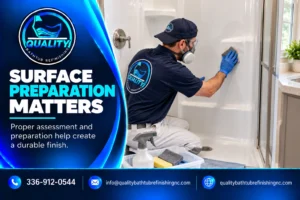
In-Content Image 1
File Name: shower-refinishing-surface-preparation.webp
Alt Text: Professional technician preparing a fiberglass shower surface before applying a refinishing coating.
What Are the Benefits of Shower Refinishing?
For a shower that is suitable for the process, refinishing can provide several practical benefits.
Improved Appearance
A worn or dated shower surface may be renewed with a compatible coating, helping the bathroom look cleaner and more updated.
Preserving the Existing Shower Structure
Refinishing generally keeps the existing shower in place rather than removing and rebuilding it.
This can be especially useful when the structure is sound and the main concern is cosmetic.
Potentially Less Disruption
A refinishing project may avoid some of the demolition, removal, and reconstruction associated with replacing a shower.
The actual disruption depends on the project and the work required.
Updating an Older Bathroom
Refinishing can be considered when the shower’s appearance no longer matches the rest of the bathroom.
Depending on the coating system, it may be possible to refresh the existing color or select a different finish.
Exploring Restoration Before Replacement
For homeowners considering a bathroom update, evaluating refinishing first may help determine whether the existing shower can be retained.
These benefits are conditional. Refinishing is not automatically appropriate for every shower, and it should not be presented as a substitute for necessary structural repairs.
What Are the Limitations of Shower Refinishing?
Shower refinishing cannot correct every problem.
Because it primarily renews the visible surface, it does not replace the need to address deeper issues.
Conditions that may make refinishing inappropriate include:
-
Structural damage or significant movement.
-
Failed or compromised waterproofing.
-
Persistent leaks.
-
Significant deterioration of the underlying material.
-
Extensive mold or moisture problems.
-
Incompatible surfaces or previous coatings.
Applying a new finish over unresolved damage can leave the original problem in place.
For example, a shower with a leaking waterproofing system needs the moisture problem assessed and corrected. A new surface coating does not rebuild that waterproofing system.
If the shower has deeper damage, professional repair or replacement may be the more appropriate solution.
How Much Does Shower Refinishing Cost?
Shower refinishing cost depends on the material, size, condition, required preparation, and scope of the work.
There is no single price that accurately represents every shower.
The main factors include:
| Cost factor | Why it matters |
|---|---|
| Shower size | Larger areas may require additional materials and labor. |
| Surface material | Different materials can require different preparation and coatings. |
| Existing condition | Worn coatings or surface damage may require additional work. |
| Repair requirements | Necessary repairs can affect the project scope. |
| Area being refinished | A shower base, walls, and full enclosure are different projects. |
| Accessibility | Bathroom layout and working conditions may affect preparation. |
| Coating system | Product requirements and application methods can vary. |
The best way to understand the cost of your specific project is to request a professional estimate.
When contacting a contractor, provide photographs, approximate dimensions, the shower material if known, and a description of the visible problems.
For an assessment of your project, visit our shower refinishing service page.
How Long Does Shower Refinishing Last?
The lifespan of a refinished shower depends on the existing substrate, surface preparation, coating compatibility, application quality, curing, and maintenance.
A properly prepared surface with a suitable coating generally has a better chance of lasting than a surface with poor preparation or incompatible materials.
Several factors influence durability.
Surface Preparation
Cleaning and preparation help establish the conditions needed for the coating to bond.
Coating Compatibility
The coating must be appropriate for the shower material and existing surface.
Application and Curing
Following the coating manufacturer’s application and curing requirements is important for performance.
Cleaning and Daily Use
Frequent exposure to water, unsuitable cleaning products, and abrasive tools can affect the condition of the finish over time.
It is also important to distinguish between coating lifespan, underlying shower lifespan, warranty coverage, and manufacturer claims. These are not necessarily the same.
Ask the refinishing professional about the expected performance of the specific coating proposed for your shower rather than relying on a universal lifespan estimate.
How Long Does Shower Refinishing Take?
The time required to refinish a shower varies depending on its size, material, existing condition, preparation requirements, and coating system.
A small shower base with limited surface wear is a different project from a full tiled enclosure requiring extensive preparation.
Project duration also has two separate parts: the time spent performing the work and the time required before the shower can be used again.
Even after application is complete, the coating may need additional curing time.
For a general explanation of refinishing schedules, see our bathtub refinishing timeline guide.
You can also learn why curing matters in our bathtub refinishing aftercare and curing guide.
Bathtub timing estimates should not automatically be applied to shower projects. Always follow the return-to-use instructions provided for your specific shower coating.
How Do You Maintain a Refinished Shower?
Proper maintenance helps protect the appearance of a refinished shower.
The most important rule is to follow the cleaning and care instructions provided for the specific coating system.
In general, homeowners should avoid abrasive cleaning tools and harsh chemicals unless the coating manufacturer explicitly approves them.
Gentle cleaning, regular rinsing, and managing soap residue and water deposits can help reduce unnecessary surface wear.
Choose Suitable Cleaning Products
Use cleaning products recommended for the finish rather than assuming that every household bathroom cleaner is appropriate.
Avoid Abrasive Scrubbing
Scouring pads, abrasive powders, and aggressive scrubbing can damage certain refinished coatings.
Manage Soap Residue and Water Deposits
Regular cleaning can prevent buildup from becoming more difficult to remove.
Follow the Recommended Curing Period
Do not begin using or cleaning the shower before the coating has cured sufficiently according to the contractor’s instructions.
For more general care information, read our bathtub refinishing maintenance guide.
Shower Refinishing vs. Other Bathroom Improvement Options
When a shower begins looking worn, refinishing is not the only option.
Homeowners may also consider targeted repair, complete replacement, or a larger bathroom remodel.
| Option | Generally appropriate when |
|---|---|
| Shower refinishing | The structure is sound and the main concern is cosmetic surface wear. |
| Shower repair | Specific damage needs correction and the remaining shower is suitable to retain. |
| Shower replacement | The structure, waterproofing, or substrate is failing or incompatible with refinishing. |
| Bathroom remodeling | The homeowner wants broader layout, fixture, or design changes. |
The right decision depends on the shower’s actual condition, your goals, and the scope of work required.
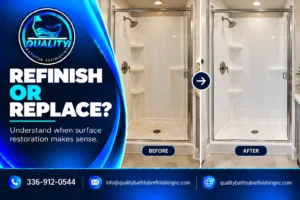
In-Content Image 2
File Name: shower-refinishing-vs-replacement-options.webp
Alt Text: Side-by-side bathroom comparison showing a worn shower surface and a professionally refinished shower.
Is Shower Refinishing Right for Your Bathroom?
Shower refinishing may be worth considering when the existing shower is structurally sound, the surface material is compatible with a suitable coating, and the main problems are cosmetic.
Before making a decision, consider the following questions:
-
What material is the shower made from? Fiberglass, acrylic, ceramic tile, and cultured marble have different refinishing requirements.
-
Is the damage cosmetic or structural? Surface dullness is different from cracks, movement, or water damage.
-
Are there signs of leaks? Moisture problems need investigation before surface restoration.
-
What appearance do you want? Determine whether a renewed surface will meet your expectations.
-
How is the shower used? Regular use and cleaning habits can affect the finish.
-
What is the project budget? Compare the work required rather than choosing based on price alone.
If your shower is in sound condition and mainly needs a cosmetic update, refinishing may be a practical option.
If it has persistent leaks, structural deterioration, or failed waterproofing, repair or replacement should be evaluated first.
For additional advice about selecting a qualified provider, read how to choose a bathtub refinishing company.
Shower Refinishing Services in North Carolina
Quality Bathtub Refinishing provides shower refinishing services for homeowners in North Carolina, including the Piedmont Triad region.
If your shower looks worn, stained, or outdated, the first step is to determine whether the existing material and condition make it suitable for refinishing.
The specific components that can be refinished, available finish options, project timing, and other requirements should be confirmed during the estimate process.
To discuss your shower, visit our professional shower refinishing service or contact us directly.
Phone: 336-912-0544
Email: info@qualitybathtubrefinishingnc.com
Website: qualitybathtubrefinishingnc.com
Frequently Asked Questions
Can an old shower be refinished?
Often, yes, if the shower is structurally sound and the main problems are cosmetic. Age alone does not determine suitability. The material, condition, and presence of underlying damage are more important.
Can a fiberglass shower be refinished?
Fiberglass showers are commonly refinished when their surfaces are sound and the problems are cosmetic. Cracks, holes, or soft spots may require repair or replacement rather than straightforward refinishing.
Can ceramic shower tiles be refinished?
In some cases, ceramic shower tiles can be refinished. The condition of the tiles, grout lines, and underlying waterproofing must be considered before proceeding.
Can you refinish a shower without replacing it?
Yes. Shower refinishing is intended to renew the surface of an existing shower without removing the entire enclosure, provided the material and condition are suitable.
How much does shower refinishing cost?
Cost depends on the shower’s size, material, condition, repairs, coating system, and whether the work includes the base, walls, or entire enclosure. A project-specific estimate is the best way to determine pricing.
How long does shower refinishing last?
Durability varies according to preparation, substrate condition, coating compatibility, application, curing, and maintenance. There is no universal lifespan that applies to every refinished shower.
How long does it take to refinish a shower?
Project duration varies depending on size, surface condition, preparation, and coating requirements. The curing period is separate from the active work, and the shower should not be used until the finish is ready.
Can a damaged shower be refinished?
It depends on the damage. Cosmetic problems may be suitable for refinishing, while structural cracks, holes, leaks, and failed waterproofing generally require repair or replacement first.
Does shower refinishing change the color?
Shower refinishing may refresh the existing color or allow a different surface color, depending on the coating system. Confirm the available options with the refinishing professional.
How do you maintain a refinished shower?
Use cleaning products suitable for the specific coating, avoid unapproved abrasive tools and harsh chemicals, and follow the contractor’s maintenance instructions.
Is shower refinishing suitable for every shower?
No. Refinishing is most appropriate for structurally sound showers with cosmetic surface problems and compatible materials. Showers with serious structural or waterproofing issues may not qualify.
When should a shower be replaced instead of refinished?
Replacement is generally more appropriate when the shower has major structural deterioration, failed waterproofing, persistent leaks, extensive moisture damage, or a surface that cannot be successfully refinished.
Conclusion
Shower refinishing can be a practical way to restore the appearance of an existing shower without replacing the entire enclosure.
For homeowners dealing with dull surfaces, staining, light scratches, or an outdated finish, professional refinishing may provide a suitable restoration option.
However, the material and underlying condition must be evaluated carefully. Refinishing does not correct leaks, structural damage, or failed waterproofing, and results depend on proper preparation, compatible coatings, curing, and maintenance.
If your shower is structurally sound and mainly needs a surface update, consider contacting Quality Bathtub Refinishing to discuss whether refinishing is appropriate for your bathroom.