How Long Does Bathtub Refinishing Take From Start to Finish?
The hands-on work of refinishing a bathtub is often completed in about a day, but the full timeline runs longer once you include scheduling beforehand and curing afterward. On Quality Bathtub Refinishing NC’s documented examples, the project itself is roughly a day, with normal use generally resuming after about 24 to 48 hours depending on curing. The exact timing depends on the tub and the coating used.
So there are really two clocks. One is the appointment: the hours the technician spends preparing and coating the tub. The other is the calendar: the time from your first call, through scheduling, the appointment, and the curing period, until you can bathe again. The rest of this guide breaks both down stage by stage, and the appointment-vs-curing table below is the single most useful part if you are short on time.
What Are the Stages of a Bathtub Refinishing Project?
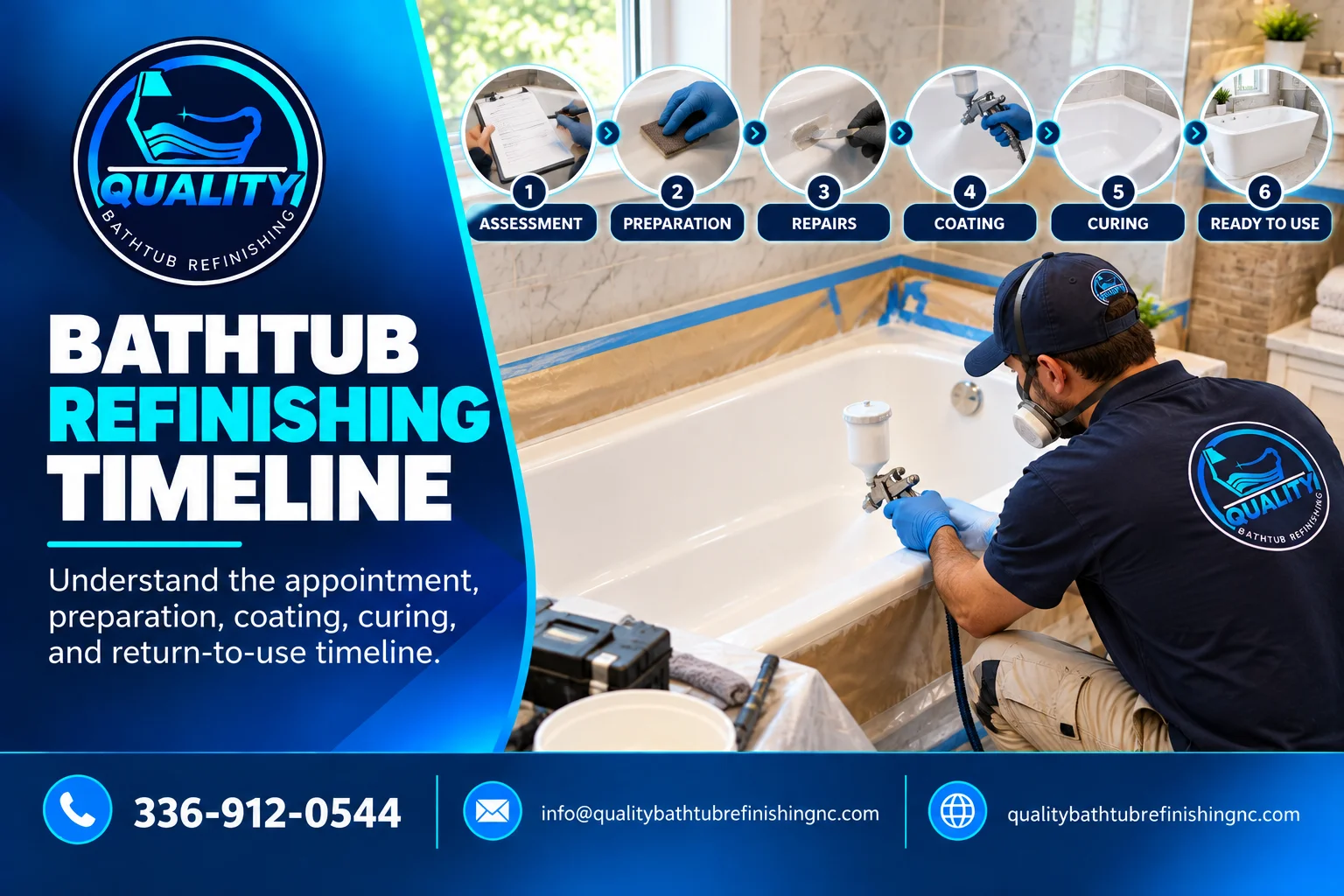
A refinishing project moves through a predictable set of stages: inquiry, assessment and estimate, scheduling, bathroom preparation, surface preparation, any repairs, coating application, drying and curing, and return to normal use. Each stage takes its own amount of time, and only some of them happen during the appointment itself. Here is what each one involves.
Initial Inquiry and Assessment
The project starts when you contact a refinishing company and describe your tub: its material, its condition, and where it is in the home. The company may ask for photos or details to assess the job, and for an unclear condition an in-person look may make sense. Different companies assess differently, so this stage’s length varies. Quality Bathtub Refinishing NC offers free online estimates, which can speed up this early step.
Estimate and Scheduling
Once the company understands the job, you receive an estimate, and if you proceed, you book an appointment. How far out that appointment falls depends entirely on the contractor’s availability, so there is no universal lead time. This is the stage to confirm the expected work duration and return-to-use window in writing. If you are weighing more than one estimate, our guide on how to compare bathtub refinishing quotes covers what each should include.
Preparing the Bathroom
Before the appointment, you will usually need to clear the area: remove toiletries, bath mats, and anything stored on or around the tub, and make sure the technician has clear access. The company will tell you exactly what it needs. This is light preparation on your side, not a project in itself. For the technical side of what happens next, see our bathtub refinishing process guide.
Surface Preparation
Surface preparation is the stage that most affects how well and how long the finish holds, and it takes up a meaningful share of the appointment. It involves cleaning, removing contaminants, addressing any existing coating, and getting the surface ready to bond. It is not a step to rush, which is part of why the appointment runs the length it does rather than being a quick spray job.
Repairs, If Needed
If the tub has chips, cracks, holes, or rust, repairing them happens before coating and can add time to the appointment. Not every type of damage can be repaired, and some conditions affect whether refinishing is the right choice at all. How much time repairs add depends on the damage. See bathtub repair vs refinishing for where the two differ, and how to know if a bathtub can be refinished for suitability by material and condition.
Coating Application
Applying the coating is the stage people picture when they think of refinishing, but it comes after all the preparation. The application itself depends on the coating system and the surface, and it is usually done in controlled layers. This is skilled work done during the appointment, and it is why proper ventilation and site protection matter during that window.
Drying and Curing
Drying and curing are not the same thing, and the difference matters for your timeline. A surface can be dry to the touch well before it is fully cured. Drying is the surface setting; curing is the coating reaching its full hardness and durability, which takes longer. Using the tub when it is merely dry but not cured is a common way to damage a new finish. Exact drying and curing times depend on the specific product and conditions, so follow the contractor’s instructions rather than any general number. Our aftercare and curing guide covers this stage in detail.
Returning the Bathtub to Normal Use
Normal use resumes only after the coating has cured, which Quality Bathtub Refinishing NC generally describes as about 24 to 48 hours, depending on the job and curing conditions. Treat that as the company’s general guidance rather than a guarantee for every coating, and follow the specific return-to-use instructions you are given. Easing back into gentle use, and following aftercare guidance from the start, helps the finish last. See the aftercare and curing guide for what to do in those first days, and the maintenance guide for long-term care.
Can a Bathtub Be Refinished in One Day?

Often, yes, the hands-on work can be done in about a day, which is how Quality Bathtub Refinishing NC describes a typical project. But “done in a day” refers to the work, not to when you can use the tub. After the technician leaves, the coating still needs to cure, generally about 24 to 48 hours, before normal use. One day of work does not mean one day until the bath is usable.
It is also not a universal rule. A tub in rough condition, with significant repairs or an old failing coating, may need more time, and some situations call for additional work. Treat the one-day figure as a common case for straightforward jobs, not a promise for every tub.
Appointment Time vs. Drying Time vs. Curing Time
These are the three timeframes homeowners most often confuse, so it is worth separating them clearly. The appointment is the work; drying and curing happen afterward and determine when you can use the tub.
| Timeline Stage | What It Means | What Homeowners Should Know |
| Appointment duration | Total time the technician is on-site | Includes setup, prep, any repairs, and coating; often about a day for a typical job |
| Active work time | Hands-on preparing and coating | A portion of the appointment, not a separate visit |
| Preparation time | Cleaning and readying the surface | A significant part of the appointment; affects how well the finish holds |
| Application time | Applying the coating in layers | Comes after preparation and any repairs |
| Drying time | Surface sets and is dry to the touch | Dry is not the same as cured; do not use the tub yet |
| Curing time | Coating reaches full hardness and durability | Longer than drying; product-specific; follow the contractor’s instructions |
| Return-to-use time | When normal bathing can resume | Generally about 24 to 48 hours per the company’s guidance, after curing |
| Total planning time | First contact through return to use | Includes scheduling lead time plus the appointment and curing; plan the bathroom to be out of use for the curing window |
The short version: the technician may be done in a day, but the tub is not ready the moment they leave. Plan for the curing window before you can bathe again.
What Can Make Bathtub Refinishing Take Longer?
Several things can extend a refinishing timeline, though none of them applies to every job. The honest answer is that condition and circumstances drive the difference, so a straightforward tub and a problem tub are not on the same schedule.
Factors that may add time:
- Existing surface damage that needs repair before coating
- Additional repair work discovered once preparation begins
- A previous coating that is failing and must be addressed
- Unusual tub materials or surface conditions
- Extra preparation the surface turns out to need
- Product-specific application or recoat requirements
- Environmental conditions affecting drying and curing
- Access or site conditions in the home
- Anything unexpected found during the appointment
This is why confirming the scope and asking what happens if more work is needed, covered in our quote comparison guide, is worth doing before the appointment. None of these guarantees a delay; they are simply the things that can move the timeline.
Does the Bathtub Material Affect the Timeline?
It can, because different materials call for different preparation, and preparation is a major part of the appointment. A heavy cast-iron or porcelain tub, a steel tub, and a fiberglass or acrylic unit are not all prepared the same way, and the condition of each affects how much work comes before coating. The material influences the approach more than it sets a fixed clock.
What this guide will not do is attach a specific number of hours to each material, because the real driver is condition and the coating system, not the material alone. If you are unsure whether your tub is a good candidate in the first place, how to know if a bathtub can be refinished walks through suitability by material and condition. The practical point for planning: tell the company your tub’s material upfront so its time estimate reflects your actual tub.
Do Repairs Add Time to a Bathtub Refinishing Project?
Usually, yes, at least a little. Repairing chips, cracks, holes, or rust happens before the coating goes on, so it adds to the appointment, and the amount depends on the extent of the damage. A small chip is quick; significant damage takes longer, and some conditions may affect whether refinishing is appropriate at all. Repairs are a normal part of many projects, not a sign something is wrong.
The timeline wrinkle to plan for is damage found during preparation, since some problems are only visible once the old surface is worked on. Ask your contractor in advance how that is handled, so a mid-appointment discovery does not catch you off guard. Our guides on bathtub repair vs refinishing and specific repairs explain what is involved.
How Long Should You Wait Before Using a Refinished Bathtub?
Wait until the coating has cured, not just dried, which Quality Bathtub Refinishing NC generally describes as about 24 to 48 hours depending on the job. The surface can feel dry well before it is fully cured, and using it too early is a common way to mar a new finish. Always follow the specific return-to-use instructions your contractor gives you, since they reflect the actual product used.
This guide keeps the return-to-use topic brief on purpose. For what to do during those first days, how to ease back into use, and the aftercare that protects the finish, see our dedicated aftercare and curing guide.
How Should You Prepare for a Bathtub Refinishing Appointment?

Prepare by clearing the space and confirming the details in advance. Remove items from and around the tub, clear a path for the technician, and make sure the bathroom is accessible. Confirm the expected work duration, the return-to-use window, and ventilation and re-entry instructions before the day. Light preparation on your part helps the appointment run on schedule.
Beyond the physical clearing, the useful preparation is informational: know roughly how long the bathroom will be unavailable so you can arrange around it. Ask the company what it needs from you ahead of time, rather than assuming. This keeps the project on its expected timeline instead of losing time at the start of the appointment.
How to Plan Your Schedule Around Bathtub Refinishing
Plan for the bathroom to be unavailable through the curing window, not just during the appointment. The key planning move is arranging alternative bathing if this is your only tub, since you cannot use it until the coating cures (generally about 24 to 48 hours per the company’s guidance). Build your schedule around that window rather than around the technician’s departure.
Practical steps:
- Arrange access to the bathroom for the appointment.
- Keep children and pets away from the work area and the curing finish.
- Plan for the tub to be out of use through the curing period.
- Make alternative bathing arrangements if it is your only tub.
- Follow the contractor’s ventilation and re-entry instructions. Do not assume an open window or an ordinary bathroom fan is enough for every product; ask what the company requires.
- Avoid premature use, even if the surface looks and feels ready.
- Confirm the expected completion and return-to-use time in advance.
What Should You Ask the Contractor About the Project Timeline?
Ask the questions that pin down both clocks, the appointment and the wait. A few that matter:
- About how long will the appointment take for my tub?
- Does that include any repairs my tub needs?
- How long after you finish before I can use the tub?
- Is that a cure time, or just dry-to-touch?
- What ventilation and re-entry instructions should I follow?
- What happens to the timeline if you find more damage during prep?
- Will I get the return-to-use instructions in writing?
These are timeline-specific questions. For the broader hiring questions, see the questions to ask checklist in our contractor-selection guide, and for evaluating the company overall, how to choose a bathtub refinishing company.
Bathtub Refinishing Timeline at Quality Bathtub Refinishing NC
Quality Bathtub Refinishing NC describes a typical bathtub refinishing project as taking roughly one day of work, with normal use generally resuming after about 24 to 48 hours depending on curing. The company offers free online estimates, serves homeowners across the Greensboro area and the wider Piedmont Triad region of North Carolina, and refinishes porcelain, cast iron, clawfoot, and fiberglass tubs. These figures are the company’s stated general expectations, not guarantees for every tub or coating.
What the public information does not pin down is the exact appointment start and finish times, product-specific curing instructions, and typical scheduling lead times, which naturally vary by job and availability. The honest approach is to confirm your specific project’s schedule and return-to-use instructions directly with the company when you book (see the client input section below). You can request a free estimate from the professional bathtub refinishing services page and check coverage for your area on the service areas page.
Frequently Asked Questions
How long does bathtub refinishing take from start to finish? The hands-on work is often about a day, but the full timeline is longer once you add scheduling beforehand and curing afterward. Quality Bathtub Refinishing NC describes a typical project as roughly a day of work, with normal use generally resuming after about 24 to 48 hours depending on curing.
How long does a bathtub refinishing appointment take? A typical appointment is often about a day, covering setup, surface preparation, any repairs, and coating application. The exact length depends on your tub’s condition and whether repairs are needed. Ask your contractor for an estimate based on your specific tub, since a problem tub takes longer than a straightforward one.
Can a bathtub be refinished in one day? Often the work can, which is how Quality Bathtub Refinishing NC describes a typical project. But “done in a day” means the work, not the wait. After the appointment, the coating still needs to cure, generally about 24 to 48 hours, before normal use. One day of work is not one day until usable.
How long after refinishing can you use the bathtub? Wait until the coating has cured, which the company generally describes as about 24 to 48 hours depending on the job. The surface can feel dry before it is fully cured, and using it too early can damage the finish. Follow the specific return-to-use instructions your contractor provides.
Does bathtub repair add time to refinishing? Usually a little, since repairs to chips, cracks, holes, or rust happen before coating. How much depends on the extent of the damage. Repairs are a normal part of many projects. Ask in advance how the timeline changes if more damage is found once preparation begins.
What can delay a bathtub refinishing project? Possible factors include existing or newly discovered damage, a failing previous coating, unusual materials or surface conditions, extra preparation, product-specific requirements, environmental conditions, and site access. None applies to every job. Condition and circumstances drive the difference, which is why confirming scope in advance helps.
Is curing time included in the appointment duration? No. Curing happens after the technician finishes and the appointment ends. The appointment covers preparation, repairs, and coating; curing is the separate waiting period before you can use the tub. This is the most common point of confusion, so plan for the curing window on top of the appointment.
Do different bathtub materials affect the timeline? They can, because different materials need different preparation, and preparation is a big part of the appointment. Condition matters as much as material. Telling the company your tub’s material and condition upfront helps it give a time estimate that reflects your actual tub rather than a generic one.
Should I stay out of the bathroom during refinishing? Yes. Keep yourself, children, and pets away from the work area during the appointment and the curing period, both for safety and to protect the finish. Follow the contractor’s ventilation and re-entry instructions, and do not assume an open window or ordinary fan is sufficient for every product.
How far in advance should I schedule bathtub refinishing? It depends on the contractor’s availability, so there is no universal lead time. When you request an estimate, ask about scheduling and plan for the bathroom to be out of use through the appointment and the curing window. Booking ahead is wise if you need the tub ready by a specific date.
Conclusion
The honest answer to “how long does bathtub refinishing take” is that there are two timelines, and you should plan around both. The work often fits in about a day, but the bathroom stays out of service through the curing window, generally about 24 to 48 hours per the company’s guidance, before you can use the tub. Drying is not curing, the appointment is not the whole story, and the exact numbers depend on your tub and the coating. Confirm your specific project’s schedule and return-to-use instructions with your contractor, and you can plan the project with no surprises.