

The honest answer to “what does bathtub refinishing cost” is that it depends, and any page that gives you one confident number is guessing. What you can get is a clear picture of what drives the price up or down, what a fair estimate should include, and how to compare quotes without getting fooled by the cheapest bid. That is what this guide is for. If you want the broader background on the service itself, our complete guide to bathtub refinishing in North Carolina covers what it is and how it works; here we stay on cost.
One thing worth saying up front: refinishing exists largely because it costs less than replacement. Restoring the surface of a tub you already own avoids the new fixture, the demolition, and often the tile and plumbing work a full replacement pulls in. So while there is no single price, the reason most homeowners look into it is financial, and the rest of this guide is about understanding that math for your specific tub.
Why There Is No Single “North Carolina Price”
Bathtub refinishing is priced per job, not off a menu. Two tubs in two homes on the same street can cost noticeably different amounts because the work each one needs is different. That is not a dodge; it is how surface-restoration work actually prices out. A quote reflects the tub in front of the technician, not a regional flat rate.
You will see national ballpark figures online, and they are worth understanding for context, but treat them carefully. Home-services cost aggregators typically report bathtub refinishing in a range that runs from a few hundred dollars up toward roughly a thousand for standard jobs, with specialty work costing more. Those are national estimate ranges compiled from mixed sources, not verified North Carolina market data, and they lump together very different tubs and conditions. Use them as a rough sense of scale, then get an actual estimate for your tub. Reliable statewide North Carolina pricing data specific to this trade is not something we can point to, so this guide does not publish a North Carolina average.
What is dependable is the comparison, not the absolute number: refinishing consistently costs a fraction of what a full tub replacement costs, because of everything replacement adds that refinishing skips. More on that comparison below.
What Actually Determines the Price
Here are the factors that move a refinishing quote, and why each one matters.
Tub material. The material changes the preparation, and preparation is labor. A cast-iron or porcelain tub is prepped differently than fiberglass or acrylic, and the harder or smoother the surface, the more careful the bonding step has to be. Material alone will not make or break a quote, but it sets the starting point.
Tub size and style. A standard alcove tub is a smaller job than an oversized soaking tub, a clawfoot with exposed exterior surfaces, or a tub-and-tile surround treated together. More surface area means more prep, more coating, and more time.
Condition. This is often the biggest single variable. A tub that just looks dull and dated is a straightforward job. A tub with chips, cracks, or rust needs repair before any coating goes on, and that repair is added labor. The more damage, the higher the quote.
Repairs before coating. Chip and crack repair, drain-area repair, and smoothing rough spots are done as part of preparation. A tub that needs several of these takes longer than one that needs none. If a tub has structural damage rather than surface damage, refinishing may not be the right call at all, which changes the conversation entirely.
Previous coatings. A tub that was refinished before, especially with a failing or peeling coating, usually needs that old layer dealt with first. Stripping or properly preparing over a prior finish adds work, so a “already refinished once” tub often costs more than a never-coated original.
Coating system and finish. A standard white finish is the baseline. A custom color adds cost, and specialty finishes such as a slip-resistant floor treatment add a step. Quality Bathtub Refinishing offers color options, so if you want to move away from a dated shade, that is on the table, and it is worth pricing as part of the quote rather than assuming it is free.
Accessibility. A tub in a tight second-floor bathroom, or one that is hard to ventilate and mask off, can take more setup time than an easy ground-floor space. This is usually a minor factor, but it exists.
Number of surfaces. Doing a tub on its own prices differently than doing a tub plus its tile surround, a sink, or a countertop in the same visit. Combining surfaces often improves the overall value because the crew is already set up, which is why homeowners refreshing a whole bathroom frequently bundle. Quality Bathtub Refinishing also refinishes showers, sinks, countertops, and ceramic tile, so a multi-surface quote is a normal request.
Labor and local market. Labor is the core of a refinishing quote, since materials are a smaller share of the total than in a replacement. Local market conditions and the specific company’s overhead factor in, which is part of why quotes vary between providers even for the same tub.
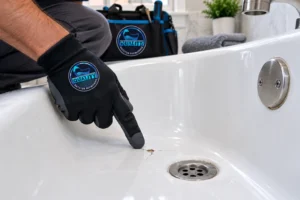
What a Professional Estimate Should Include
A good estimate is specific about the tub, not just a number. When you request one, a clear estimate generally accounts for:
- The tub’s material, size, and current condition
- Any chip, crack, rust, or drain-area repair needed before coating
- Whether a previous coating has to be removed or prepared over
- The coating and finish, including any custom color
- Any additional surfaces you want done at the same time
- The expected timeline, both the working time and when you can use the tub again
For context on that last point, many bathtub refinishing jobs are completed in about a day, and Quality Bathtub Refinishing generally advises waiting roughly 24 to 48 hours after the coating cures before using the tub. Timeline matters to cost indirectly: a job that has to be split across visits, or that needs extra repair time, is a bigger job.
One convenience worth using: you do not always need an in-home visit to start. Quality Bathtub Refinishing offers free online estimates, so you can send clear photos of the tub, including any damage, and get an initial read before scheduling. Good photos, showing the whole tub plus close-ups of chips, cracks, rust, or previous refinishing, make that first estimate more accurate.

Questions to Ask Before You Accept a Quote
Price only means something once you know what is behind it. Before accepting, ask:
- What preparation and repair does this quote include? Preparation is where durability comes from, so a quote that skips it is not really cheaper.
- Does the price cover repairing existing chips, cracks, or rust, or are those extra?
- Is a custom color included or added?
- What coating system will you use, and what does its warranty cover?
- How long before I can use the tub again?
- Is the written estimate the final price, or a starting figure that can change on site?
A company that prepares surfaces properly and stands behind the work will answer these plainly. Quality Bathtub Refinishing backs its work with a written warranty; the specific term is worth confirming as part of your quote so you know exactly what is covered.
Why One Quote Is Unusually Low or High
When you gather two or three estimates, one is often noticeably cheaper. That gap usually has a reason, and it is worth understanding rather than just taking the lowest.
An unusually low quote often signals shortcuts in preparation, since prep is the most time-consuming and skippable-looking step. When refinished tubs peel or fail early, inadequate preparation is a common cause, so the “savings” can turn into a redo within a year. A very low bid can also mean repairs are excluded and will be added later, or that a lower-grade coating is being used.
An unusually high quote is not automatically a rip-off. It can reflect more extensive repair, stripping a failed previous coating, a larger or specialty tub, a custom finish, or simply a company with more overhead. The point is not to chase the extremes but to understand what each quote actually includes, so you are comparing the same scope.
How to Compare Estimates Fairly
The trap is comparing a number to a number instead of a scope to a scope. To compare fairly:
- Make sure each quote covers the same work, especially repairs and preparation.
- Check whether custom color and any specialty finish are in or out on each.
- Compare what the warranty actually covers, not just whether one exists.
- Ask each company what happens if a problem shows up during the job, such as hidden rust.
- Weigh the written estimate against how specific and thorough the assessment was.
The most useful estimate is the one tied to a real look at your tub, in person or from good photos, not a flat rate quoted sight unseen. A confident number given before anyone has seen the tub is the one to be most skeptical of.
Refinishing vs. Replacement, from a Cost View
This guide is about refinishing cost, so this section stays on the money, not the full decision. For the complete decision framework, that belongs in a dedicated comparison; here is the financial shape of it.
Refinishing avoids the parts of a replacement that cost the most: the new tub itself, demolition and disposal of the old one, and the tile and plumbing work that removing a built-in tub usually triggers. Because refinishing keeps the existing fixture and only restores the surface, it consistently lands at a fraction of a full replacement’s total cost. Industry and home-improvement sources routinely note that a full bathtub replacement, once demolition, the new fixture, tile, and plumbing labor are counted, runs into the thousands, commonly quoted in a several-thousand-dollar range and up depending on the bathroom.
Where refinishing does not save money is when it is the wrong tool. Coating over a structurally failing tub does not fix the problem, and paying to refinish a tub that should be replaced is money spent twice. So the cost comparison only holds when the tub is a sound candidate in the first place.
A Note on North Carolina
There is no special North Carolina refinishing price, but there is a North Carolina reason the service is popular here: a lot of the housing stock is old enough to have original tubs worth restoring. In Greensboro, for example, the City’s 2025 Analysis of Impediments to Fair Housing Choice, using U.S. Census American Community Survey estimates, reported roughly 133,029 housing units in 2022, with about 43.8% built in 1979 or earlier. That is Greensboro-specific data, not a statewide figure, but it reflects a broader pattern across established North Carolina communities: many homes with solid older tubs, particularly cast iron, where refinishing is the cost-effective way to update a bathroom without a full remodel.
Service availability and scheduling can vary by location within the region. You can check coverage for your area on the service areas page. When you are ready for an actual number on your tub, the fastest route is professional bathtub refinishing with a free estimate rather than relying on any published average.
Frequently Asked Questions
How much does bathtub refinishing cost in North Carolina?
There is no single reliable statewide figure, because the price depends on the tub’s material, size, condition, the repairs it needs, the coating and finish, and how many surfaces you do at once. National estimate ranges give a rough sense of scale, but an actual estimate on your tub is the only accurate number. What holds true everywhere is that refinishing costs a fraction of a full replacement.
Why do refinishing quotes vary so much?
Because the work varies. A dull but sound tub is a simple job, while one with chips, rust, or a failing previous coating needs repair and extra preparation first. Different coating systems, custom colors, and company overhead also move the price.
Is a cheaper quote a good deal?
Not always. The most common way to make a refinishing job cheaper is to cut preparation, which is exactly what determines whether the finish lasts. A low bid can also exclude repairs that get added later. Compare what each quote includes, not just the totals.
Does a custom color cost more than white?
Generally yes. Standard white is the baseline, and a custom color or a specialty finish like a slip-resistant floor adds a step. It is worth pricing as a line item in your quote.
Is refinishing cheaper than replacing the tub?
In almost all cases where the tub is a sound candidate, yes. Refinishing avoids the new fixture, demolition, and the tile and plumbing work replacement usually requires, so it lands at a fraction of replacement cost.
Can I get a price without an in-home visit?
Often, yes. Quality Bathtub Refinishing offers free online estimates, so you can send photos of the tub and its condition to get an initial read before scheduling. Clear close-ups of any damage make that estimate more accurate.