
Bathtub refinishing gets talked about in extremes: some sources treat it as a magic fix, others warn that it always peels. Neither is accurate. Refinishing is a useful process with clear strengths and real limits, and whether it is right for you depends on your tub and your expectations. This guide lays out both sides honestly, the genuine advantages, the honest drawbacks, and the situations where refinishing fits or does not, so you can decide for yourself rather than be sold. For the full background on what the service is, our complete guide to bathtub refinishing in North Carolina covers that in depth.
One idea threads through everything below and is worth stating early: many of the “cons” people attribute to refinishing are not flaws in the method at all. They come from poor workmanship, unrealistic expectations, an unsuitable tub, or rough aftercare. Separating those out is most of what makes this decision clear, so this guide keeps that distinction front and center.
The Short Version
In brief: refinishing is a strong option when you have a structurally sound tub with surface problems and you want to update it affordably without a renovation. It is a poor option when the tub is structurally failing, when you want a different tub, or when you expect a coating to perform like a brand-new factory fixture forever. The detail below fills in the space between those two poles.
Bathtub Refinishing: The Pros
It extends the useful life of a tub you already have. If the tub is solid and only the surface has worn out, refinishing restores it rather than sending a perfectly good fixture to the landfill. For durable tubs, cast iron in particular, this is often the sensible move, since the tub can outlast several surface lifetimes.
It costs less than full replacement. Refinishing avoids the new fixture, demolition, plumbing changes, and tile work that a replacement usually pulls in. The exact figures vary by tub and job, so this guide does not quote a number, but the direction is consistent: refinishing is the lower-cost path when the tub qualifies. Our cost guide breaks down the specific factors.
It is fast and low-disruption. Because the fixture stays in place, there is no demolition and no torn-up bathroom. Many bathtub refinishing jobs are completed in about a day of hands-on work, followed by a curing period before use. Compared with a replacement that can run days to weeks, that is a meaningful difference for a household with one bathroom.
It can update the look, including the color. Refinishing removes stains, dullness, and surface roughness, and it can change the color of a dated tub. If the problem is that the tub looks old and tired rather than that it is broken, this is exactly what refinishing addresses.
It avoids some replacement-related waste. Keeping a usable fixture in place avoids the demolition and disposal that removing a tub generates. The EPA notes that reducing and reusing construction and demolition materials is a meaningful way to cut waste. This is a genuine but modest point, covered more carefully in the waste section below.
It suits surface and cosmetic problems well. Dullness, staining, discoloration, light scratches, and minor chips are the natural territory of refinishing, and it handles them without the cost and mess of a bigger project.
Bathtub Refinishing: The Cons

It does not fix structural problems. This is the most important limitation. Refinishing restores a surface; it cannot make a cracked, rusted-through, or structurally failing tub sound again. A coating over an unstable tub hides the problem briefly and then fails. If the tub itself is failing, refinishing is the wrong tool.
The new surface is a coating, not a factory finish. A refinished tub looks and feels like new when done well, but it is a coating applied over an existing tub, not a newly manufactured fixture. It should be judged on that basis. It can be chipped by a dropped heavy object or scratched by abrasives, the same way any surface can be damaged.
Longevity depends on care. A refinished finish is not maintenance-free. It rewards gentle, non-abrasive cleaning and can wear out faster if scrubbed with harsh products. How long it lasts is partly in the homeowner’s hands, which is a con only in the sense that it asks for a little ongoing attention.
Results depend heavily on who does the work. The durability of a refinished tub is tightly tied to preparation and application quality. A rushed job can peel or fail early. This makes choosing the refinisher unusually important, more so than in many home projects where the materials do more of the work.
There is a required wait before use. After the job, the finish needs to cure before the tub can be used again, Quality Bathtub Refinishing generally advises waiting about 24 to 48 hours after the coating cures, depending on the coating system and the instructions you are given. It is a short wait, but it is real, and rushing it causes problems. Our aftercare and curing guide covers that window.
Some conditions and expectations limit it. Certain damage, certain materials, or a previous failed coating can complicate a job or change the result, and color or finish options can depend on the coating system. None of these make refinishing unreliable; they just mean it is not a universal yes.
The Distinction That Clears Up Most “Cons”
A lot of negative stories about refinishing are really stories about something else. It helps to separate five different sources of a bad outcome, because only the first is actually a limitation of the method:
- Inherent limitations of refinishing. It restores surfaces, not structure, and it produces a coating rather than a new fixture. These are real and permanent traits of the method.
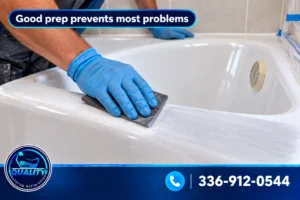
- Poor workmanship. Inadequate preparation or sloppy application causes peeling and early failure. That is a contractor problem, not a refinishing problem.
- Unrealistic expectations. Expecting a coating to be indestructible, or to fix a structural crack, sets up disappointment that the method was never going to meet.
- Homeowner misuse or poor maintenance. Abrasive scrubbing, harsh chemicals, or using the tub before it cures damage a finish that would otherwise have held.
- The underlying tub. A tub that was a poor candidate to begin with, already failing structurally, will not be saved by any coating.
When you read complaints online, it is worth asking which of these five you are actually looking at. Most peeling-and-failure stories trace to categories 2, 4, or 5, not to refinishing being a flawed idea. This is the difference between “refinishing does not work” and “that particular job was not done or treated well.”
When Refinishing Can Make Sense
Refinishing tends to be a good fit when:
- The tub is structurally sound and the problems are on the surface (dullness, stains, minor chips, dated color).
- You are happy with the tub’s size, shape, and location.
- You want to keep cost and disruption low.
- You want the job done quickly rather than living through a renovation.
- You want to preserve an original tub, such as a solid cast-iron tub in an older home.
- You are prepared to follow simple aftercare and use gentle cleaning afterward.
In these cases, refinishing delivers most of the visual benefit of a new tub for a fraction of the effort and cost.
When Refinishing May Not Be Appropriate
Refinishing is the wrong choice, or needs to wait behind a repair, when:
- The tub has structural damage: serious cracks, rust-through, or substrate failure.
- You want a different tub size, shape, or position, or you are converting to a walk-in shower.
- You are doing a full bathroom remodel anyway, where a new tub fits the scope.
- The tub has been refinished before and failed repeatedly, and the underlying fixture is no longer worth restoring.
If any of these describe your situation, refinishing is either impossible or a short-term patch. Whether to refinish or replace in borderline cases is its own decision, and our refinishing vs. replacement guide works through it in full rather than repeating it here.
What Determines Whether the Result Holds Up
Since so much of refinishing’s reputation rides on outcomes, it is worth knowing what actually drives them:
- Surface preparation. The biggest single factor. A properly cleaned and prepared surface is what lets the coating bond and last.
- Substrate condition. A sound tub gives the finish a stable base; a compromised one does not.
- Coating system and application. Appropriate materials, applied correctly, perform better than shortcuts.
- Use and maintenance. Gentle cleaning and normal use let a finish reach its potential; abrasives and impacts shorten it.
Notice that three of these four are about the workmanship and the homeowner, not the method. That is the practical version of the distinction above: refinishing done well on a good candidate and cared for properly is a strong result, and most failures come from missing one of those conditions.
Does It Last?
Quality Bathtub Refinishing states that a professionally refinished tub can last around 10 to 15 years with proper care. Treat that as a care-dependent estimate for this company’s work, not a guaranteed lifespan for every refinished tub. Actual performance varies with preparation, application quality, the coating system, the tub’s condition, how heavily it is used, and how it is cleaned. Some sources cite shorter or longer ranges depending on those same variables, which is exactly why a single universal number does not exist. The honest framing is that a well-done, well-maintained refinish lasts many years, and a poorly done or poorly maintained one does not.
Refinishing and Bathroom Waste
The environmental angle is real but limited, and worth stating carefully. Replacing a tub generates demolition and disposal waste: the old tub, and often the surrounding tile. Keeping a usable tub through refinishing avoids some of that, and the EPA supports the general principle that reducing and reusing construction and demolition materials cuts waste. What this does not mean is that refinishing is “zero waste” or automatically “eco-friendly,” since it uses its own materials and process. The fair statement is that refinishing a sound tub avoids some replacement-related waste, which is one modest consideration among several rather than a headline benefit.
Questions to Ask Before You Refinish
To get the pros and avoid the cons, the questions that matter are about the work and the fit:
- Is my tub actually a good candidate, or does it have structural problems?
- What surface preparation and repairs does the quote include?
- What coating system do you use, and is it suited to my tub’s material?
- How long before I can use the tub, and what aftercare is required?
- What maintenance will keep the finish in good shape?
- What warranty do you provide, and what does it cover?
A refinisher who answers these clearly, and who tells you honestly when your tub is not a candidate, is the kind that produces the “pro” outcomes rather than the “con” ones.
Pros and Cons at a Glance
| Pros | Cons |
|---|---|
| Extends the life of a sound existing tub | Does not fix structural damage |
| Costs less than full replacement | Result is a coating, not a new factory tub |
| Fast, often about a day of work | Requires a cure period before use |
| Low disruption, no demolition | Longevity depends on gentle care |
| Can update color and appearance | Outcome depends heavily on workmanship |
| Avoids some replacement-related waste | Some conditions and materials add limits |
| Well-suited to surface and cosmetic problems | Poor candidates cannot be saved by coating |
Frequently Asked Questions
What are the main pros and cons of bathtub refinishing?
The main pros are lower cost than replacement, fast and low-disruption work, restored appearance including color changes, and keeping a sound tub in service. The main cons are that it does not fix structural damage, the result is a coating rather than a new tub, it needs a cure period before use, and its longevity depends on good workmanship and gentle care.
Is a refinished bathtub as good as a new tub?
For appearance, a well-done refinish looks and feels like new. Structurally, it is your existing tub with a restored surface, not a new fixture, so it should be judged as a surface restoration. If you specifically want a brand-new tub or a different one, replacement is the way to get that.
Does bathtub refinishing fix cracks or structural damage?
No. Refinishing restores surfaces. A crack that flexes or leaks, or rust that has gone through the material, is structural and needs repair or replacement, not a coating. A good refinisher will tell you when a tub is not a candidate.
Why do some people say refinishing peels or does not last?
Most of those outcomes come from poor preparation, an unsuitable tub, or harsh aftercare, rather than from refinishing being unreliable. Done properly on a sound tub and maintained gently, a refinish holds up for years.
How long does a refinished bathtub last?
Quality Bathtub Refinishing states around 10 to 15 years with proper care. That is care-dependent, not guaranteed, and actual lifespan depends on preparation, the coating system, the tub’s condition, use, and cleaning.
Can every bathtub be refinished?
No. A structurally sound tub with surface problems is a good candidate. A structurally failing tub, or one you want to replace with a different size or style, is not. Material and prior coatings can also affect the result.
Is refinishing worth it?
For a sound tub with surface problems where you want an affordable, low-disruption update, it usually is. For a failing tub or when you want a different fixture, it usually is not. The honest answer depends on your tub and your goals rather than a blanket yes or no.