
Understanding What Kind of Bathtub Damage You Have
Not all bathtub damage is the same, and the differences matter more than most homeowners expect. A light scratch and a hairline crack can look similar from standing height, but one is a cosmetic issue a coating can restore and the other may involve the tub’s structure. This guide is about telling those apart. It walks through the common types of bathtub damage, explains what each one typically looks like and may indicate, and shows where each tends to fall on a simple spectrum: purely cosmetic, repairable but localized, or a possible structural problem.
The reason this classification is useful is that it points toward the right kind of solution. Broadly, cosmetic surface damage is what refinishing addresses; localized damage may need a targeted repair before or as part of refinishing; and damage that reaches the tub’s underlying material may need repair, replacement, or a professional assessment rather than a new coating. The article does not diagnose your specific tub, and it does not provide repair instructions. Its job is to help you understand what you may be looking at and what that likely means.
If you want related angles, the guide on signs your bathtub may need refinishing covers recognizing that something is wrong, and whether your tub can be refinished covers eligibility by material and condition. This page is narrower: it is about the damage itself.
What Counts as Bathtub Surface Damage?
“Surface damage” is a loose term homeowners use for almost anything wrong with a tub’s appearance, but it helps to be precise, because the word “surface” is doing important work.
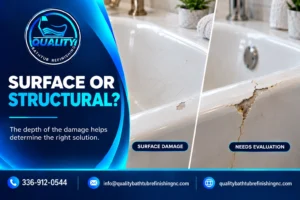
True surface damage affects the visible finish or the outer layer: the gloss, the color, the coating. Structural or substrate damage affects the body of the tub, the material beneath the finish, or the tub’s integrity.
Refinishing is a surface process. It prepares and recoats the outer layer of a sound tub. So the central question running through every damage type below is the same: does this damage stop at the surface, or does it reach into the tub itself? That single distinction, more than the name of any particular defect, decides whether you are likely looking at a refinishing job, a repair-then-refinish job, or something that needs a professional to assess before anyone commits to a plan.
Common Types of Bathtub Damage
For each type below: what it usually looks like, what it may indicate, whether it is primarily cosmetic or potentially structural, and what that suggests about refinishing, repair, or evaluation. Language is deliberately cautious, because the same-looking defect can mean different things on different tubs.
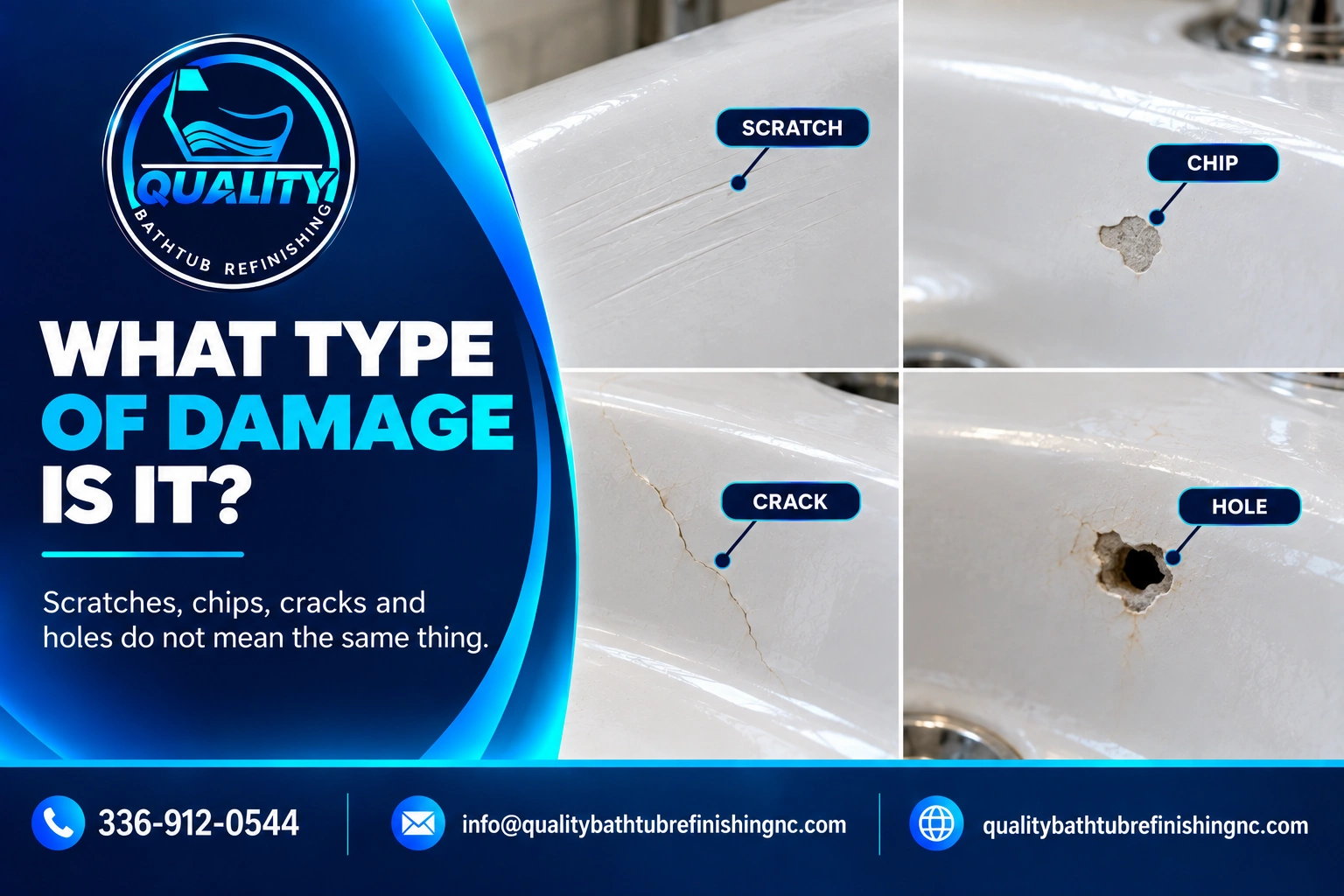
Scratches
Superficial scratches are fine lines that dull the look of the surface; deeper scratches can be felt and may cut through a coating; the most serious expose the material underneath. Light surface scratching is typically cosmetic and is often within what refinishing addresses.
Deeper scratches, and any that expose the substrate, depend on depth, material, and the condition beneath, and may need evaluation rather than a simple recoat. Not every scratch is removed by refinishing.
Stains and Discoloration
These range from surface staining that sits on or in the finish, to general discoloration, to permanent-looking wear where the finish itself has changed.
An important distinction: some stains are really a cleaning or maintenance matter, not a refinishing matter, and will respond to appropriate cleaning. Staining that will not clean off and is in the finish can be addressed by refinishing on a sound tub. A stain does not automatically mean refinishing is required. If a stain sits over a rough or pitted area, that area is worth evaluating.
Chips
Chips vary a lot. A small surface chip, a chip through a coating, a deeper chip exposing the substrate, and multiple chips are different situations.
Localized chips can frequently be addressed as part of refinishing, sometimes with a targeted repair first, depending on size, location, and what lies beneath. A chip that has exposed the underlying material, or that keeps spreading, should be evaluated. Not every chip is automatically repairable or refinishable.
Cracks
This is the type to be most careful about. Cracking can be superficial surface crazing, cracking within a coating, or cracks that involve the underlying tub material, up to significant structural cracks.
Surface-level crazing may be cosmetic; cracks that involve the substrate are a different matter and may point toward repair or a replacement assessment rather than simple refinishing. Cracks cannot be diagnosed from a distance, and a crack that reaches the tub’s structure is exactly the situation for a professional look before any decision.
Holes
A hole is fundamentally different from ordinary cosmetic wear. It means the material is penetrated, and it generally requires structural or localized repair before any coating work; refinishing itself does not fill or structurally restore a hole.
For fiberglass tubs specifically, where the material has been holed or damaged, that is a repair question, and fiberglass tub repair is the relevant service. Whether a particular hole can be repaired depends on its size, location, and the tub’s material and condition, which is an evaluation question, not a self-diagnosis.
Peeling, Bubbling, and Flaking
These almost always indicate that an existing coating or surface system is failing. The contributing factors vary and can include surface preparation, application, substrate condition, moisture or environmental conditions, the previous coating, and how the surface was used and maintained; no single one of these is universally to blame.
The key point: coating over a failing surface is not necessarily an appropriate solution, because a new layer over a failing one tends to fail too. Peeling, bubbling, or flaking is an evaluation situation.
Rust and Corrosion
Distinguish surface rust from localized corrosion, from corrosion tied to a damaged area, from extensive substrate deterioration. Refinishing does not repair structural corrosion of the underlying material.
Surface rust may be addressable in the course of proper surface work, but rust that reflects corrosion of the tub’s material needs the underlying condition evaluated first. Depth is everything here, and depth is hard to judge by eye.
Dull or Worn Finish
A dull or worn look can mean several things: normal surface wear, loss of the finish, accumulated residue, effects of cleaning products, or genuine deterioration of the coating or surface.
It is not automatically a sign of “refinishing failure,” and sometimes it is a cleaning or maintenance matter rather than damage at all. Where it is genuine finish wear on a sound tub, it is a common and well-suited candidate for refinishing.
Surface Damage vs. Structural Damage
This is the backbone of the whole guide, so it is worth stating plainly.
Surface Damage
Surface damage affects the visible finish or the outer surface layer: dullness, staining, discoloration, light scratches, minor chips, surface crazing, and a worn finish on an otherwise sound tub. This is the category refinishing is designed for.
Structural or Substrate Damage
Structural or substrate damage affects the underlying tub material or the tub’s integrity: cracks that reach the substrate, holes, extensive corrosion, a body that flexes or feels soft, and serious underlying deterioration.
Refinishing is a surface restoration and coating solution; it does not rebuild a tub that is compromised underneath. These situations may require repair, replacement, or a professional assessment.
Two cautions, both directions. Do not assume a particular defect always means replacement; many chips, scratches, small cracks, and rust spots are repairable depending on material, location, and severity. And do not assume a bad-looking surface is automatically only cosmetic.
The honest reality is that the boundary between the two categories, which is the thing that decides your path, is often the exact thing a homeowner cannot judge confidently without a professional look.
Can Surface Damage Be Refinished?
Generally, genuine surface damage on a structurally sound tub is what refinishing is for. Dullness, staining in the finish, light scratching, minor chips, surface crazing, and a worn finish are the everyday cases where refinishing restores the surface, subject to the tub being sound and the material being suitable. That is the good news, and it covers a large share of what homeowners are actually dealing with.
The qualifier is that “surface damage” has to actually be surface damage. The moment a defect reaches the substrate, exposes underlying material, or reflects a failing structure, it stops being a straightforward refinishing case. That is not a reason for alarm; it is a reason to have it looked at, because the difference is often invisible from across the room.
When Repair May Be Needed Before Refinishing
Some damage needs to be addressed before, or instead of, a new finish. Localized repair as a first step is common and normal. A chip that has exposed the substrate, a small area of localized damage, certain cracks, surface rust tied to a damaged spot, and a failing previous coating may all need appropriate remediation before a coating can be applied properly.
In these cases refinishing may still be part of the eventual result, but only after the underlying issue is handled.
Some conditions go further and may make refinishing inappropriate on its own: holes, cracks that reach the tub’s structure, extensive corrosion, and a compromised substrate. These are repair-or-replacement-assessment situations.
This guide does not tell you how to perform any repair; the point is to recognize when damage is beyond a straightforward recoat so you get the right kind of help. Understanding why preparation and repair come first is covered in the refinishing process overview.
What About a Previously Refinished Tub?
A tub that already carries a refinishing layer adds a variable to damage evaluation: the coating itself. Damage on a previously refinished tub can be damage to the coating rather than the original surface, and the coating’s adhesion and condition matter.
If the existing coating is peeling, bubbling, flaking, of unknown or incompatible type, or was applied over poor preparation, that needs to be evaluated before anything new goes on. As noted above, applying another layer over a failing coating tends to reproduce the failure, so a failing prior coating is an evaluation situation, not a quick recoat.
The maintenance guide covers the care that helps a finish last and avoid some of this.
How Material Affects Damage and Suitability
The same damage can behave differently depending on what the tub is made of, so material is worth a brief note here, though the full material-by-material breakdown lives in whether your tub can be refinished.
A few examples of why material matters for interpreting damage: rust and chipping-through-to-metal are relevant to porcelain-enameled and cast iron or steel tubs in ways they are not for plastics; cracking, flexing, and soft spots are particular concerns for fiberglass and can indicate the material itself is affected; and acrylic and cultured marble behave differently again.
The takeaway is not a rule per material but a caution: how worried to be about a given crack, chip, or rust spot depends partly on the material it is in, which is one more reason a professional assessment is valuable when damage may be more than skin deep.
When to Have the Tub Professionally Evaluated
Across every damage type, one theme recurs: the fact that decides your path, whether the damage stops at the surface or reaches the tub, is the hardest thing to judge yourself.
Have the tub professionally evaluated rather than guessing when you see cracks that may involve the tub’s material, any hole, extensive or deep rust, a chip or worn area exposing the substrate, a soft or flexing spot, a previous coating that is peeling or failing, or any damage that seems to be spreading.
Quality Bathtub Refinishing NC offers free estimates, which is the low-commitment way to get a read, and for fiberglass tubs where the material is damaged, fiberglass tub repair is a related service. You can see the full scope of work on the bathtub refinishing services page.
Quick Damage Assessment Checklist
Use this to describe what you see, not to diagnose it. For each type of damage present, the useful question is which category it likely falls into.
- Dull or worn finish – usually surface; often refinishable on a sound tub.
- Stains / discoloration – may be cleaning-related or surface; refinishable if in the finish.
- Light scratches – usually surface; often refinishable.
- Deep scratches exposing material – may reach the substrate; evaluate.
- Minor chips – often addressable, sometimes with a repair first.
- Chips exposing the substrate / spreading – evaluate.
- Surface crazing – may be cosmetic.
- Cracks involving the tub material – possible structural issue; evaluate.
- Holes – repair needed before any coating; evaluate.
- Peeling / bubbling / flaking coating – failing coating; evaluate, do not just recoat.
- Surface rust – may be addressable; deep rust / corrosion – evaluate.
If everything you see falls in the “surface” descriptions and the tub is sound, you are likely looking at a refinishing candidate. If any item falls in the “evaluate” descriptions, that specific damage warrants a professional look before deciding.
Frequently Asked Questions
What types of damage can bathtub refinishing address?
Refinishing is best suited to surface and cosmetic damage on a structurally sound tub: a dull or worn finish, staining in the finish, light scratches, minor chips, and surface crazing. Damage that reaches the tub’s underlying material, such as holes, structural cracks, or deep corrosion, generally needs repair or a professional assessment rather than a coating alone.
Can scratches in a bathtub be refinished?
Light surface scratches are typically within what refinishing addresses. Deeper scratches that cut through the finish and expose the material beneath depend on depth and material and may need evaluation, so not every scratch is simply refinished away.
Can a chipped bathtub be refinished?
Localized chips can frequently be addressed as part of refinishing, sometimes with a targeted repair first, depending on size and location. A chip that has exposed the substrate or keeps spreading should be evaluated rather than assumed to be a simple recoat.
Can a cracked bathtub be refinished?
It depends on the crack. Superficial surface crazing may be cosmetic, but cracks that involve the tub’s underlying material may require repair or a replacement assessment rather than simple refinishing. Cracks should be professionally evaluated rather than diagnosed from a distance.
Does a hole in a bathtub need repair before refinishing?
Generally yes. A hole means the material is penetrated, and it typically needs structural or localized repair before any coating work; refinishing itself does not fill or structurally restore a hole. Whether a hole can be repaired depends on its size, location, and the tub’s material and condition.
Can a rusty bathtub be refinished?
It depends on how deep the rust goes. Surface rust may be addressable during proper surface work, but rust that reflects corrosion of the underlying material needs the underlying condition evaluated first. Refinishing does not repair structural corrosion.
What causes a refinished bathtub to peel?
Peeling indicates a coating has failed, and the causes vary: surface preparation, application, substrate condition, moisture or environmental conditions, the previous coating, and use or maintenance can all contribute. No single cause is universally responsible, which is why a failing coating should be evaluated.
Can a peeling bathtub be refinished again?
Possibly, but not by simply adding another coat. The failing coating needs to be evaluated and may require appropriate remediation before a new system can be applied. Recoating over a failing surface tends to repeat the problem.
Is surface damage different from structural bathtub damage?
Yes, and the difference is central. Surface damage affects the visible finish or outer layer and is what refinishing addresses. Structural or substrate damage affects the tub’s underlying material or integrity and may require repair, replacement, or professional assessment rather than a coating.