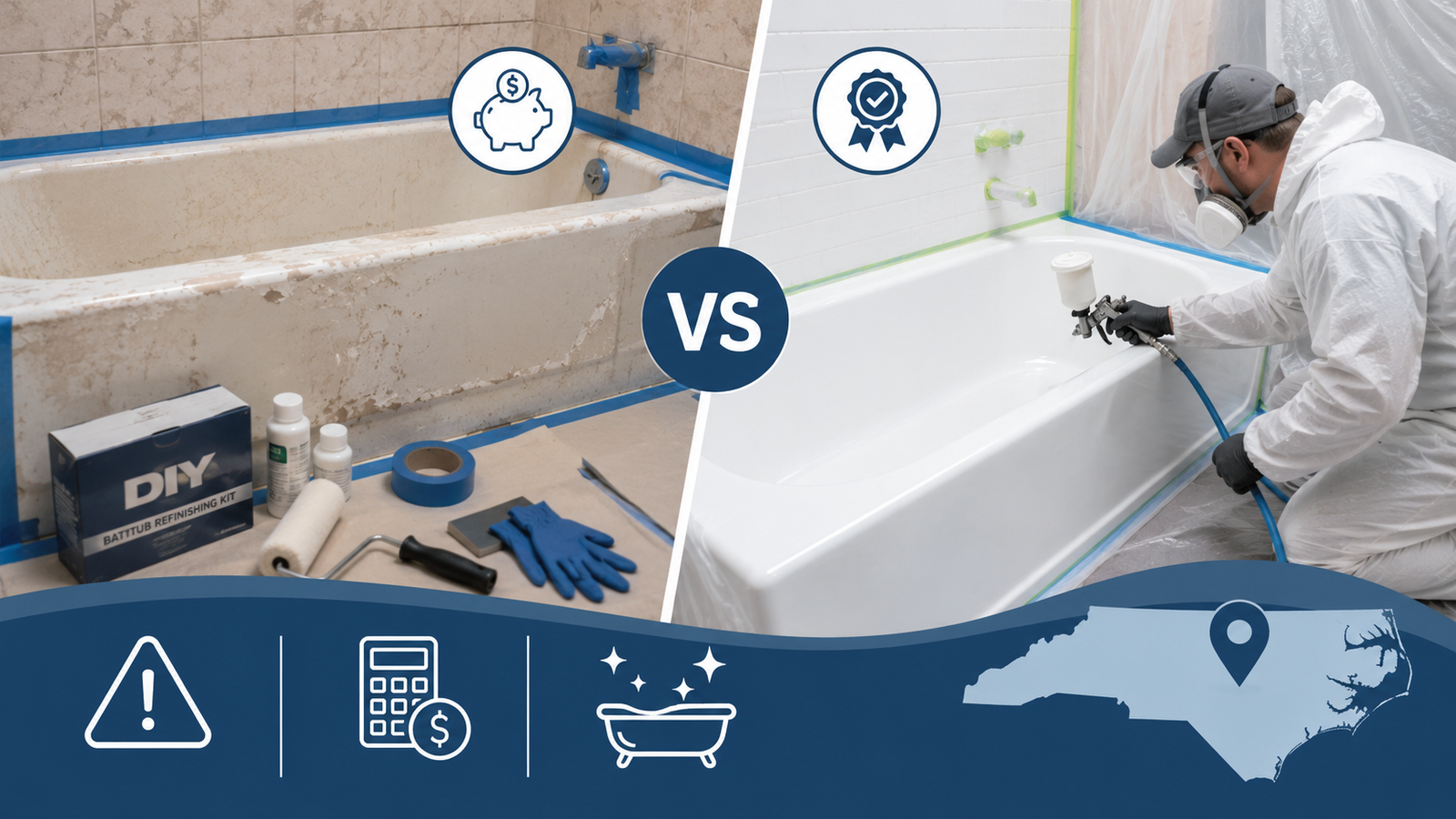
Home improvement videos make bathtub refinishing look incredibly easy. You watch someone roll on a fresh coating in a few minutes, and suddenly your old tub starts looking like a simple weekend project. Hardware stores push that idea even further with DIY kits promising quick results at a low price.
The problem is that bathtub refinishing is much more technical than it appears online. A finish might look smooth on day one, but poor bonding, uneven application, or moisture exposure can cause peeling surprisingly fast.
That is why many homeowners across North Carolina choose professional refinishing instead. With the right preparation and materials, an older tub can look refreshed again without the cost of full replacement. Most projects are completed in a single visit, so the bathroom is not out of use for long.
Why DIY Refinishing Often Fails Early
Most store-bought kits rely on basic epoxy coatings that are difficult to apply evenly without spray equipment. Even small prep mistakes can affect how the finish cures later.
Some of the most common DIY issues include:
- peeling around the drain or edges
- visible roller marks and streaking
- rough texture from dust or trapped debris
- bubbling caused by moisture underneath the coating
- discolouration after repeated hot showers
These problems usually do not appear immediately. The surface may look acceptable for a few weeks before wear starts showing.
Professional refinishing systems are designed differently. The surface is chemically prepared first, so the new coating bonds properly instead of sitting loosely on top like standard paint.
DIY vs Professional Refinishing
| Factor | DIY Kits | Professional Refinishing |
| Application Method | Brush/Roller | Spray equipment |
| Finish Quality | Uneven, visible marks | Smooth, factory-like |
| Durability | Short-term | Long-lasting |
| Surface Prep | Minimal | Extensive |
| Risk of Peeling | High | Very low |
| Overall Cost | Low upfront | Better long-term value |
Is Professional Reglazing Worth the Extra Cost?
For many homeowners, the real value comes from durability rather than just appearance.
A DIY kit may seem cheaper upfront, but failed coatings often need to be stripped completely before the tub can be refinished again. That extra repair work adds time, cost, and frustration later.
Professional resurfacing usually lasts much longer because the materials are made to handle daily moisture, heat, and cleaning products. The finish also looks smoother and more consistent compared to brush or roller applications.
Instead of replacing the entire fixture, refinishing gives older bathrooms a cleaner appearance without major demolition or plumbing work.
What Professional Refinishing Actually Involves
One reason professional results hold up better is the amount of preparation involved beforehand.
The process usually starts with removing soap residue, mineral buildup, and old coatings from the tub surface. Chips or weak spots are repaired before any new material is applied.
After that, the surface is carefully prepared so the coating can bond correctly. Multiple thin layers are sprayed evenly instead of being rolled on by hand. Once cured, the finish forms a smooth protective layer designed for regular bathroom use.
Most homeowners never see this preparation stage, but it is usually the difference between a finish lasting months versus lasting years.
 Can a Tub Be Fixed After a Failed DIY Kit?
Yes, in many cases it can.
A lot of homeowners try a retail refinishing kit first and then call for professional help once the surface begins peeling. Before the tub can be refinished properly, the old coating has to be completely removed.
That cleanup process takes time because leftover paint residue prevents new coatings from bonding correctly. Once the surface is stripped and repaired, the tub can usually be refinished successfully.
How Long Does a Professionally Refinished Tub Last?
With proper care, a professionally refinished bathtub can last many years.
Daily habits make a difference. Using gentle liquid cleaners instead of abrasive powders helps preserve the finish longer. It is also best to avoid suction-cup bath mats or rough scrubbing pads that can slowly wear down the coating.
Most homeowners find that basic maintenance is enough to keep the surface looking clean and glossy for a long time.
A Practical Alternative to Full Replacement
Replacing a bathtub often turns into a much bigger project than expected. Once demolition starts, costs can increase quickly because of plumbing adjustments, tile repair, or flooring damage nearby.
Refinishing avoids most of that disruption by restoring the existing fixture instead of tearing it out completely. It also reduces construction waste by keeping usable materials in place rather than sending them to a landfill.
For homeowners who want an updated bathroom without a full renovation, refinishing is often the simpler and more cost-effective option.
Frequently Asked Questions
1. Why do DIY bathtub refinishing kits peel so quickly around the drain?
Retail kits rely on simple stick-on paints that cannot handle constant water exposure or shifting temperatures. Water slips beneath the unbonded edges easily, causing the coating to bubble and peel away quickly.
2. Can I use a regular paint roller to apply a store-bought refinishing kit?
Rollers and brushes leave heavy texture lines, bubbles, and visible streaks across the porcelain. Professional application requires high-pressure spray equipment to achieve a completely smooth, factory-level appearance.
3. Do professional technicians wear specialised safety gear while working?
Yes, our crews use full respirator masks, protective suits, and heavy-duty ventilation fans during spray application. This gear ensures a clean workplace and maintains strict indoor safety protocols.
4. How long do I have to wait before using my tub after a professional glazing?
You must wait 24 hours before running water over the fresh surface. This time window allows the chemical polymer matrix to cure completely, ensuring maximum water resistance.
5. Is the warranty on a professional application better than a retail kit?
Yes, retail kits offer zero protection against peeling or user application mistakes. Our professional services come backed by a solid warranty that safeguards your home investment over the years.
6. Can a DIY kit fix deep structural chips or rust spots around a soap dish?
No, retail paints are too thin to fill structural voids or stop rust from expanding. Our team uses specialised industrial fillers to repair structural defects completely before applying our glaze.
