
If you have called around for quotes, you have probably heard the same job described three different ways. One company reglazes tubs, another refinishes them, a third resurfaces them, and a fourth throws in “recoating” or “re-enameling” for good measure. It is easy to assume these are four different services at four different quality levels. For the most part, they are not. This guide explains what the terms actually mean, why companies use them so differently, and, more usefully, what you should compare instead of getting hung up on the label. For the broader background on the service itself, our complete guide to bathtub refinishing in North Carolina covers that; here the whole point is untangling the words.
The short version, stated up front so you are not kept waiting: in common use these terms describe the same basic process. The important differences between one company and another are in how they do the work, not in which word they put on their truck.
The Short Answer: Mostly the Same Thing
Bathtub refinishing, reglazing, and resurfacing are generally used to describe the same process: restoring the surface of an existing tub by repairing damage, preparing the old surface, and applying a new coating, rather than replacing the tub. Industry reference material lists reglazing, resurfacing, recoating, and re-enameling as alternate names for bathtub refinishing, which tells you these are largely synonyms in everyday use rather than four distinct procedures.
That is the honest answer, and it is worth trusting over any company that insists its chosen word represents a fundamentally different and superior service. When that claim comes up, the right response is to ask what specifically is different about their materials and steps. If they cannot point to a concrete difference in preparation, repair, or coating, the difference was in the vocabulary, not the work.
What Each Term Suggests
Even though the terms overlap, each one carries a slightly different emphasis in how people use it. Understanding the flavor of each helps you read a quote, without reading too much into it.
Refinishing is the broad, catch-all term. It covers the whole process of restoring a tub’s surface and is the word most widely used across the industry. When in doubt, this is the umbrella the others fit under.
Reglazing leans on the word “glaze” and evokes the glossy finish of the original enamel or porcelain. Some companies favor it because it sounds like the tub is being returned to a factory-like shine. In practice it describes the same restoration process as refinishing, not a separate glazing technology.
Resurfacing emphasizes the surface being renewed. It is common in commercial and multi-surface contexts, where the same process is applied to tubs, tile, sinks, or counters. Again, it points to the same core work.
Recoating and re-enameling show up less often. “Recoating” simply stresses the new coating layer. “Re-enameling” can be misleading, because true porcelain enameling is a high-temperature factory process, and what a refinisher applies in your bathroom is a coating system, not a rebaked porcelain enamel. If a company uses “re-enameling” to imply they are re-firing enamel on site, that is a term worth questioning.
The takeaway is not to memorize four definitions. It is to recognize that all of these words point at the same job, with different marketing emphasis.
Why Companies Use Different Words
If the process is the same, why the different vocabulary? A few practical reasons, none of them sinister on their own.
Regional and habit-based preference is the biggest one. Different areas and different companies simply settled on different words over time, the way “soda” and “pop” describe the same drink. Search behavior is another: homeowners type all of these terms into Google, so a company may use a particular word, or several, to match how customers search. And marketing plays a role, since “reglazing” can sound more premium than “refinishing” to some ears, even when the work is identical.
Where it crosses into a problem is when a company uses terminology to manufacture a distinction that does not exist, implying their “reglazing” is a categorically different and better service than a competitor’s “refinishing” without anything real behind it. That is the situation this guide is meant to help you see through.
What Actually Differs Between Companies
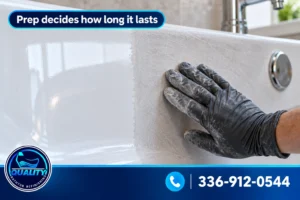
Since the words are largely interchangeable, here is where the real, quote-to-quote differences live. These are what separate a lasting result from one that peels, regardless of what the service is called.
Surface preparation. This is the single biggest variable. A coating only lasts if the old surface is properly cleaned and prepared so the new finish can bond. Two companies using the same word can do wildly different prep work, and that difference shows up a year later.
Repairs. How a company handles chips, cracks, and worn spots before coating affects both the look and the durability of the result. Some include repairs, some treat them as extras, some skip them.
Coating system. The specific products used, and whether they suit your tub’s material, matter more than the label on the service. Different coating systems have different characteristics and manufacturer requirements.
Application and curing. How the coating is applied and how the cure is handled affect the finish. Rushed application or rushed curing undermines even good materials.
Substrate experience. Whether the company works confidently with your tub’s material, such as cast iron versus fiberglass, affects the outcome, because preparation is matched to the material.
Two quotes that both say “reglazing” can represent very different jobs on all five of these points. Two quotes using different words can represent nearly identical work. That is exactly why the terminology is the wrong thing to compare.
Does the Word Affect Price?
Not by itself. A company does not charge more because it says “reglazing” instead of “refinishing.” What affects price is the work behind the word: the tub’s condition and material, the repairs needed, the coating system, and any custom color or additional surfaces. If one quote is higher, the reason is in the scope, not the vocabulary, as we explain in more detail in our guide to bathtub refinishing cost in North Carolina. Comparing the word to the word tells you nothing useful about price.
What Homeowners Should Actually Compare
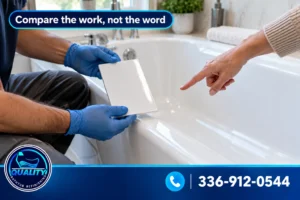
When you contact a company, skip the debate about which term is “real” and ask about the work. These questions cut through the terminology:
- What surface preparation do you perform before coating?
- How do you repair chips, cracks, or other surface damage, and is that included?
- What coating system do you use, and is it suited to my tub’s material?
- What substrate materials do you regularly work with?
- How long does the finish need to cure before I can use the tub?
- What maintenance does the finish require?
- What warranty do you provide, and what does it cover?
The answers to these tell you far more than whether a company calls it reglazing or refinishing. A provider who prepares surfaces properly, repairs damage, uses an appropriate coating system, and stands behind the work is the one to hire, whatever word is on the invoice.
Spotting Misleading Terminology
A few signals suggest the vocabulary is doing more work than the process:
- A claim that their term represents a uniquely superior process, with no concrete explanation of what is actually different in materials or steps.
- “Re-enameling” used to imply on-site porcelain enameling, which is not what in-bathroom refinishing does.
- Heavy emphasis on the name of the service and little detail about preparation, repairs, coating, or warranty.
- A refusal to say what coating system they use or what their preparation involves.
None of these means a company is dishonest by default, but they are cues to ask more questions before signing.
A Note for North Carolina Homeowners
Because North Carolina has a large stock of older homes with original tubs, homeowners here run into all of these terms while shopping for the same underlying service. The practical advice does not change: focus on the process and the provider, not the label. Whether a company advertises reglazing, refinishing, or resurfacing, what matters is that your tub is a sound candidate and that the work is done properly.
If you want the service done and want to skip the terminology guessing, professional bathtub refinishing describes the work plainly and offers a free estimate. The same company also handles shower, sink, countertop, and ceramic tile surfaces, which is where “resurfacing” is often used interchangeably for the same restoration on other surfaces.
Frequently Asked Questions
Is reglazing the same as refinishing?
In common use, yes. Reglazing, refinishing, and resurfacing generally describe the same process of restoring a tub’s surface rather than replacing the tub. The meaningful differences between companies are in preparation, repairs, and the coating system, not in which term they use.
Is resurfacing different from refinishing?
Not in any consistent, industry-wide way. “Resurfacing” emphasizes renewing the surface and is common for tubs, tile, sinks, and counters, but it points to the same restoration process. Treat it as a synonym and compare the actual work.
What about re-enameling? Does that mean real porcelain enamel?
Be careful with that term. True porcelain enameling is a high-temperature factory process. A refinisher working in your bathroom applies a coating system, not a rebaked enamel. If a company uses “re-enameling” to suggest on-site enameling, ask exactly what they mean.
Does one term last longer than another?
No. Durability comes from the quality of the preparation, the coating system, the application, and how the tub is maintained, not from whether the service is called reglazing or refinishing. A well-prepared job outlasts a rushed one regardless of the name.
If the words mean the same thing, how do I compare companies?
Ask about the work: surface preparation, how repairs are handled, the coating system, cure time, maintenance, and warranty. Those answers distinguish providers far better than the term they use for the service.
Why do companies use different words for the same job?
Regional habit, matching how customers search, and marketing preference. It becomes a concern only when a company uses terminology to claim a superior process without any real difference behind it.