How Long Does Bathtub Refinishing Last?
A professionally refinished bathtub commonly lasts in the range of about 10 to 15 years with proper care, which is the expectation Quality Bathtub Refinishing NC states on its material. Treat that as a realistic planning figure under good conditions, not a promise. Actual lifespan varies with the coating system, the tub’s condition, the quality of preparation and application, and how the finish is cared for.
It helps to understand where a range like that comes from. It generally reflects a company’s or product’s expectation under proper care, not an independently established scientific average for all tubs and coatings. Some finishes last longer with gentle use and good care; others wear sooner if the surface was compromised, the preparation was inadequate, or the finish was treated harshly. So the range is a useful anchor for expectations, but it is not a commitment that your specific tub will last a set number of years. The sections below explain the variables that move it.
What Does the Lifespan of a Refinished Bathtub Mean?
“Lifespan” gets used loosely, so it is worth separating four different things that are often blurred together. They are not interchangeable, and confusing them is where most unrealistic expectations come from.
- The expected useful life of the refinished surface: roughly how long the new finish may stay serviceable and good-looking with proper care. This is what the 10 to 15 year figure refers to.
- The lifespan of the underlying bathtub: the tub itself (especially a cast-iron or solid tub) can last far longer than any single finish; refinishing renews the surface, not the tub.
- A coating manufacturer’s stated performance: what a product is documented to do under its specified conditions, which is not the same as a guarantee for your completed job.
- The warranty period: the defined time a company will address covered problems under its terms. This is usually different from, and often shorter than, the expected useful life.
- The most important distinction for planning is the last one: a warranty period is not an expected lifespan. A finish may be expected to last well beyond the warranty, and a warranty does not promise the surface stays flawless for its whole potential life. For how warranty coverage works, see our bathtub refinishing warranty guide.
What Factors Affect How Long Bathtub Refinishing Lasts?
Durability is the product of several factors working together. No single one guarantees a long life, and a weakness in any can shorten it.
- Existing bathtub condition. The state of the surface before refinishing matters. A sound tub with ordinary wear is a better foundation than one with hidden rust, structural issues, or a failing previous coating. Problems in the substrate can shorten the life of whatever goes on top.
- Bathtub material. Porcelain, cast iron, fiberglass, acrylic, steel or enamel, and cultured marble all behave differently, and the right approach depends on the material. It would be misleading to assign each material a fixed number of years; what matters is that the coating system suits the actual substrate. Compatibility, not material alone, drives durability.
- Surface preparation. Preparation is central to how well a coating bonds and therefore how long it lasts. A surface that is properly cleaned, decontaminated, and readied gives the finish a strong foundation. You do not need the technical steps, and should not attempt them, but it helps to know this is where much of the durability is won or lost. See the bathtub refinishing process guide for what proper preparation involves.
- Coating system and product compatibility. Coatings differ in formulation, intended substrate, application requirements, and documented performance. A system suited to your tub and applied per its requirements is more likely to last. There is no single universal coating, and this guide does not name a specific product, since that depends on the contractor and should be confirmed with them.
- Application and curing. Following the product’s application and curing requirements is important to the result. A finish that cured properly under suitable conditions starts life stronger than one that did not. Our aftercare and curing guide covers why curing matters in the early days.
- Frequency and type of use. How often and how gently the tub is used affects wear over time. Heavy daily use, dropped objects, and rough treatment wear a finish faster than careful use. There is no precise formula here; the general point is that gentler use tends to preserve the finish longer.
- Cleaning and maintenance. Suitable cleaning is one of the biggest factors in how long a finish stays looking good, and harsh or abrasive products are a common cause of premature dullness and wear. This guide keeps cleaning brief on purpose; our bathtub refinishing maintenance guide covers appropriate products and methods in detail.
- Previous refinishing or repairs. A tub that has been refinished or patched before is a different surface, and a prior coating can affect both durability and whether another treatment is advisable. Previous work should be disclosed and assessed.
Why Do Some Refinished Bathtubs Wear Out Earlier Than Expected?
Early wear usually traces back to one or more of the factors above, but a visible problem rarely announces its own cause. Possible contributors include an unsuitable or deteriorated substrate, inadequate preparation, product incompatibility, application problems, insufficient curing, abrasive cleaning, physical damage, or not following the product-specific care instructions. Any of these can cut a finish’s life short.
The important caution: these are possible factors, not proof of the cause in a particular tub, and the fault does not automatically lie with the contractor or the homeowner. Early peeling, for example, could relate to a hidden previous coating, to preparation, or to a cleaner used afterward. Determining the actual reason usually needs an assessment. For a fuller look at what goes wrong and how to avoid it, see our guide on common bathtub refinishing mistakes.
How Can You Make a Refinished Bathtub Last Longer?
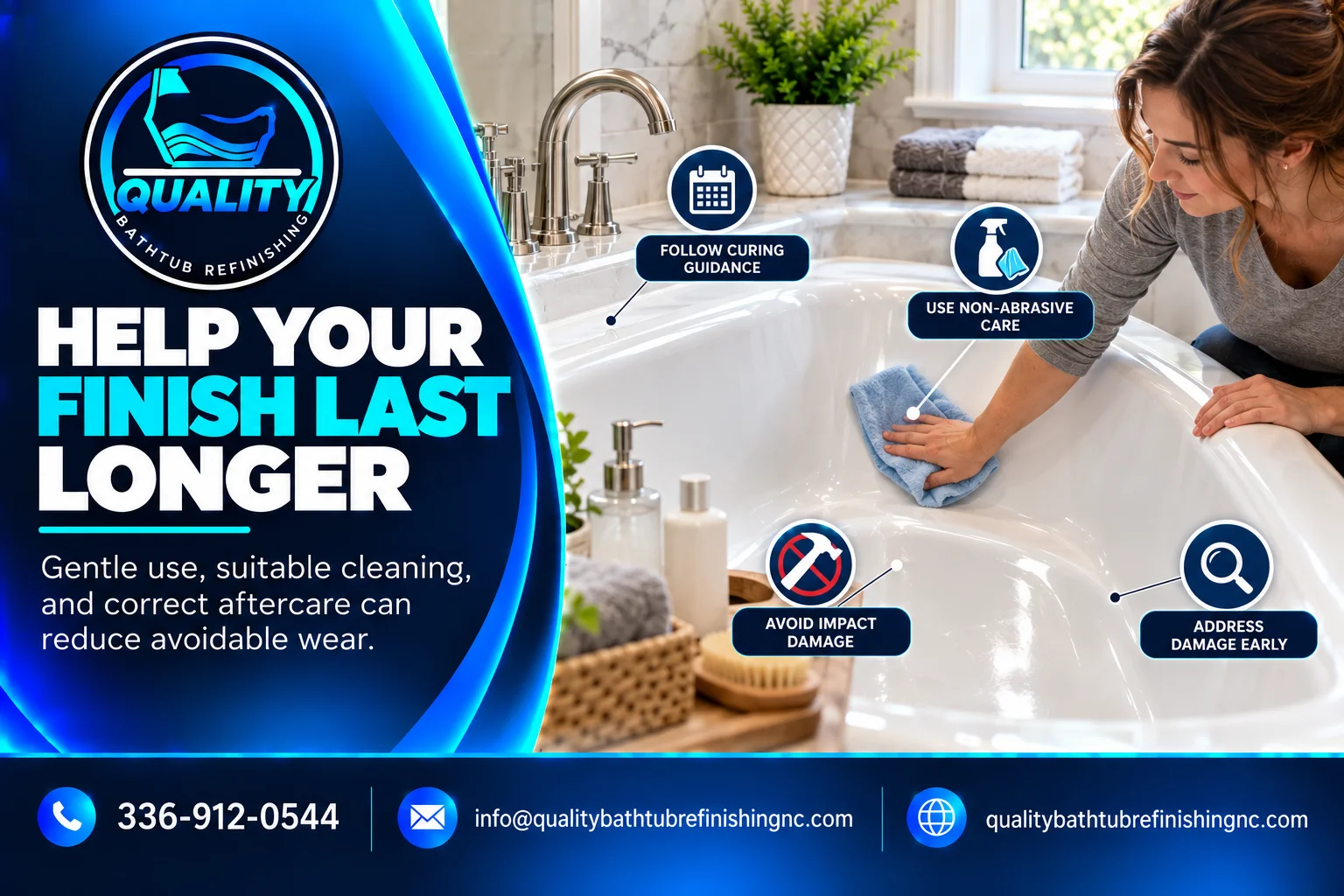
You cannot control every variable, but the care side is largely in your hands, and it meaningfully affects how long the finish stays good. None of these steps guarantees a specific lifespan; together they remove the most common avoidable causes of early wear.
- Follow the contractor’s return-to-use instructions, and do not use the tub before the finish has cured.
- Use only cleaning products suitable for your specific refinished surface.
- Avoid abrasive pads, scouring powders, and harsh chemicals the coating maker advises against.
- Avoid dropping heavy objects into the tub.
- Address new chips or damage promptly rather than letting them spread.
- Follow the written aftercare instructions you were given.
- Keep your warranty and product-care information.
- Ask the contractor before using any unfamiliar cleaning product.
For the detailed routine, see the bathtub refinishing maintenance guide, and for the critical first days, the aftercare and curing guide. These extend the life of the finish; they do not override the tub’s condition or the coating’s limits.

What Are the Signs That a Refinished Bathtub Is Wearing Out?
Signs that a finish is aging include peeling, chipping, bubbling, a dull or uneven appearance, visibly worn areas, exposed underlying material, or deterioration that keeps recurring. These indicate the finish may be nearing the end of its useful life, or that something needs attention.
As with any symptom, appearance does not establish cause, and one worn spot does not necessarily mean the whole surface must be replaced. Some issues can be addressed; others signal the finish is genuinely at the end of its life and a fresh treatment should be considered. The sensible response to any of these signs is to document it and have it assessed rather than assume the worst or ignore it. Where a specific problem has its own detailed guide, follow that for more.
Can You Refinish a Bathtub Again?
Often, yes, a bathtub can be refinished again once a finish wears out, but it is not guaranteed and depends on the situation. Suitability hinges on the condition of the existing coating, how many previous treatments the tub has had and of what type, the underlying material, any current damage, whether the proposed system is compatible, and whether the existing coating can be properly prepared for a new one.
Because a previously refinished surface adds variables, this is a case where a professional assessment matters before assuming a repeat treatment will work or last. A tub whose previous coating is sound and can be properly prepared is a different prospect from one with a failing, incompatible, or multiply-recoated surface. If your tub has been refinished before, have its current condition assessed rather than assuming another coat will simply go on. Our guide on how to know if a bathtub can be refinished covers the suitability factors.
Is Refinishing Still Worth Considering as the Finish Ages?
As a finish ages, the practical question becomes whether to refinish again, repair a localized issue, or replace the tub, and that comes down to the tub’s condition and your priorities. A sound tub whose only issue is a worn surface is often still a good refinishing candidate; a tub with structural problems may point toward replacement.
This guide will not re-litigate the whole value decision, since that is covered elsewhere. For whether refinishing makes sense for you overall, see is bathtub refinishing worth it and the balanced pros and cons, and for the refinish-versus-replace comparison, see bathtub refinishing vs replacement. The lifespan point is simply that a finish has a useful life, and as it ends you have options worth weighing with a professional.
Professional Bathtub Refinishing in North Carolina
Quality Bathtub Refinishing NC serves homeowners across the Greensboro area and the wider Piedmont Triad region of North Carolina, and states a potential lifespan of roughly 10 to 15 years with proper care for its refinishing work. As explained above, that is the company’s stated expectation under good conditions, not a guarantee that every tub will last a set number of years. The company refinishes porcelain, cast iron, clawfoot, and fiberglass tubs, offers free online estimates, and states that it provides a written warranty with its work.
If you are weighing refinishing, the durability of the result depends heavily on a proper assessment, suitable preparation, and good aftercare, which is why working with a professional who evaluates your specific tub matters. You can request a free estimate from the professional bathtub refinishing services page and confirm your area on the service areas page. The exact warranty duration and terms are best confirmed directly with the company (see the client input section below), and the warranty period should not be read as the same thing as the expected lifespan.
Frequently Asked Questions
How many years does bathtub refinishing last?
A professionally refinished bathtub commonly lasts in the range of about 10 to 15 years with proper care, which is the expectation Quality Bathtub Refinishing NC states. Treat that as a realistic figure under good conditions, not a guarantee. Actual lifespan depends on the tub’s condition, the coating, the preparation and application, and ongoing care.
Can a refinished bathtub last 15 years?
It can, under good conditions with proper care, and 10 to 15 years is the range the company describes. But it is not guaranteed for every tub. Finishes last longer with suitable preparation, a compatible coating, gentle use, and appropriate cleaning, and shorter where the surface was compromised or treated harshly.
Does professional bathtub refinishing last longer than DIY?
Homeowner discussions commonly suggest professional results tend to outlast DIY-kit results, which is consistent with the importance of proper preparation, a suitable coating, and correct application and curing. That is a general pattern rather than a guaranteed rule, and individual results vary with the tub and the work.
Does bathtub material affect refinishing lifespan?
Material matters, but mainly through compatibility. Different materials need different preparation and a suitable coating system rather than each having a fixed number of years. A finish that suits the substrate and is applied properly is more likely to last. It would be misleading to assign a set lifespan to each material.
Does frequent bathtub use shorten the finish’s life?
Heavier use and rough treatment generally wear a finish faster than gentle, careful use, though there is no precise formula. Dropping heavy objects, abrasive scrubbing, and harsh chemicals can accelerate wear. Gentle use and suitable cleaning help the finish last closer to its expected life.
Can cleaning products shorten the lifespan of a refinished bathtub?
Yes. Abrasive cleaners, scouring powders, and harsh chemicals can contribute to premature dullness and wear on a refinished surface, which is more delicate than the original material. Using suitable, non-abrasive products is one of the most effective ways to extend the finish’s life. See our maintenance guide for more detail.
Why does bathtub refinishing sometimes peel early?
Early peeling can relate to preparation, a hidden previous coating, substrate condition, curing, or damage from unsuitable cleaners. The symptom does not identify the cause on its own, and the fault is not automatically the contractor’s or the homeowner’s. An assessment is usually needed to determine what happened in a specific tub.
Can a refinished bathtub be refinished again?
Often, but not always. It depends on the existing coating’s condition, the number and type of previous treatments, the underlying material, current damage, and whether a compatible system can be properly applied. Because a previously refinished surface adds variables, a professional assessment is the reliable way to know.
Is the warranty period the same as the expected lifespan?
No. The warranty period is the defined time a company will address covered problems under its terms, while the expected lifespan is how long the finish may stay serviceable with care. They are usually different, and the warranty is often shorter. Do not read a warranty length as a promise of lifespan.
How can I tell when my refinished bathtub needs attention?
Watch for peeling, chipping, bubbling, a dull or uneven surface, worn areas, or exposed material underneath. These suggest the finish may be aging or that something needs attention. Document what you see and have it assessed rather than assuming either that it is fine or that the whole tub must be replaced.
Conclusion
The realistic answer to how long bathtub refinishing lasts is a range, commonly about 10 to 15 years with proper care as Quality Bathtub Refinishing NC describes, with the important caveat that it is an expectation, not a guarantee.
Durability is built from the tub’s condition, the preparation, a compatible coating, correct application and curing, and gentle ongoing care. It can be shortened by harsh cleaning, rough use, or a compromised surface.
Keep the warranty period and expected lifespan separate in your mind, follow the care guidance, and have any early wear assessed. Those steps give the finish its best chance of reaching the upper end of its expected range.