Why Do Bathtub Refinishing Problems Happen?
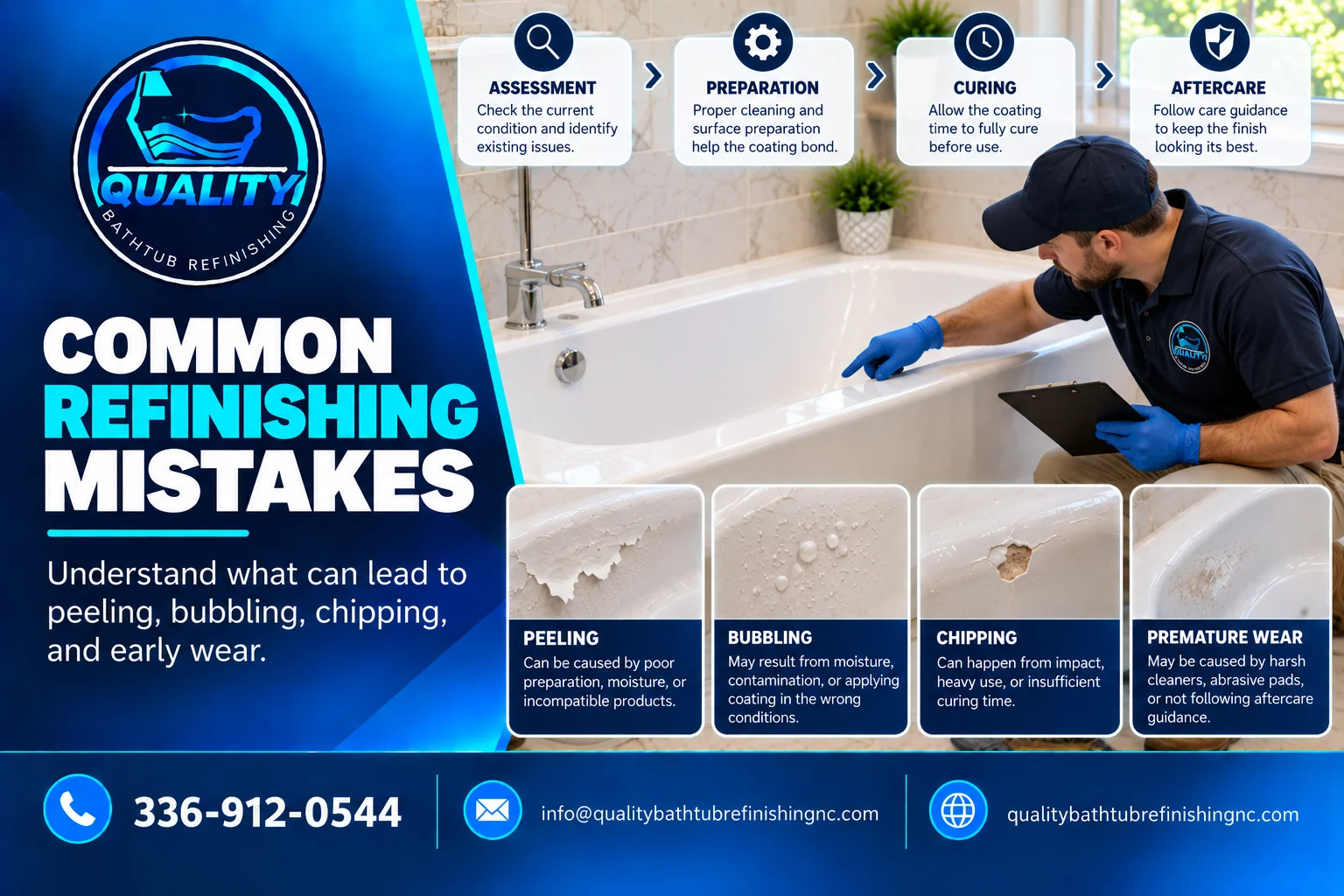
Problems happen because refinishing depends on several things going right in sequence, and a weakness at any stage can affect the result. The main factors are the suitability of the tub or substrate, the quality of the surface preparation, the compatibility of the coating, the application, the curing conditions, later cleaning and care, and any pre-existing structural or surface damage. No single one explains every failure.
That is the honest framing to keep in mind throughout. A peeling finish might trace back to preparation, to a hidden pre-existing condition, to curing, or to an unsuitable cleaner used afterward, and often the only way to know is an assessment. This guide is not here to assign blame in the abstract; it is here to help you understand where things can go wrong so you can prevent what is preventable and respond sensibly to what is not.
12 Common Bathtub Refinishing Mistakes
1. Refinishing a Bathtub Without Assessing Its Condition
Starting without a proper look at the tub’s material and condition invites problems, because the right approach depends on what is actually there. A tub with hidden rust, a failing previous coating, or structural issues is a different job from one with ordinary wear. A careful assessment, through detailed photos or an in-person visit, is what lets a professional plan the preparation and flag anything that makes refinishing unwise. If you are unsure whether your tub is a candidate at all, see how to know if a bathtub can be refinished.
2. Ignoring Existing Chips, Cracks, or Surface Damage
Existing damage that is not addressed before refinishing can undermine the new finish or show through it. Chips, cracks, holes, and rust generally need to be identified and handled before coating, and some conditions affect whether refinishing is appropriate. The mistake is treating the coating as a cover-up for damage underneath. For how damage is evaluated and when repair is the better path, see bathtub surface damage and bathtub repair vs refinishing.
3. Overlooking Previous Coatings or Repairs
A tub that has been refinished, painted, or patched before is a different surface than bare original material, and a previous coating that is not identified and handled can cause the new one to fail. This is why disclosing any prior work matters, and why a professional assesses what is already on the tub. An unknown surface treatment underneath is a common hidden cause of later peeling.
4. Inadequate Surface Preparation
Preparation is the stage that most affects whether a finish bonds and lasts, and it is also the easiest to shortchange because it is invisible once the job is done. A surface that is not properly cleaned, decontaminated, and readied gives the coating less to hold onto. You do not need to know the technical steps, and you should not attempt them yourself, but you should understand that thorough preparation is central. The bathtub refinishing process guide explains what proper preparation involves.

5. Using an Incompatible Coating System
A coating has to suit the substrate it is going on, and using one that is not appropriate for your tub’s material can lead to adhesion or durability problems. There is no single coating that is right for every surface, and suitability follows the manufacturer’s requirements for that product and material. The mistake is assuming any refinishing product works on any tub. A professional should be able to confirm the system suits your surface.
6. Applying a Coating Under Unsuitable Conditions
Coating products often specify the conditions they should be applied and cured in, and ignoring those can affect the result. Rather than invent universal temperature or humidity numbers, the point is that application conditions matter and follow the product’s instructions. This is part of why professional application in a controlled way differs from a rushed job in poor conditions.
7. Rushing the Application or Professional Work
Refinishing done properly follows a sequence, preparation, repair, application, cure, and rushing any part can show up in the finish. That said, a short appointment is not automatically a sign of poor work; many straightforward jobs are completed efficiently. The mistake is cutting corners on the steps that matter, not the overall speed. Understanding the expected stages, covered in the bathtub refinishing timeline guide, helps you tell a brisk job from a careless one.
8. Ignoring Product-Specific Drying and Curing Instructions
Drying and curing are not the same, and treating them as if they are leads to trouble. A surface can be dry to the touch long before the coating has cured to full hardness. Curing times depend on the specific product and conditions, so there is no single universal number. Following the contractor’s product-specific guidance is what protects the finish in those first days. See the aftercare and curing guide for the distinction in detail.
9. Using the Bathtub Too Soon
Using the tub before the coating has cured is one of the most common and most avoidable ways to damage a new finish. The surface may look and feel ready while it is still curing underneath. The right waiting period depends on the product, so follow the contractor’s specific return-to-use instructions rather than a general rule of thumb. When in doubt, wait and confirm with the company.
10. Cleaning the Refinished Surface With Unsuitable Products
A refinished surface can be damaged by abrasive cleaners, harsh chemicals, or scouring tools that would not faze the original material. Using the wrong products, or scrubbing with abrasive pads, is a frequent cause of premature dullness or wear that has nothing to do with the original workmanship. The bathtub refinishing maintenance guide covers which cleaning approaches are appropriate for a refinished finish.

11. Choosing a Contractor Based Only on the Lowest Price
Picking purely on price can mean paying for a thinner scope: less preparation, fewer repairs, or unclear coating and warranty terms, which can cost more when the finish fails early. The lowest quote is only a good deal if it covers the same work as the others. Understanding scope, preparation, repairs, product information, warranty, and aftercare matters more than the headline number. See how to choose a bathtub refinishing company and how to compare bathtub refinishing quotes.
12. Ignoring Early Signs of Surface Deterioration
Noticing a small area of peeling, bubbling, or chipping and doing nothing can let a manageable issue grow. Early signs are worth documenting and raising with the contractor promptly, ideally while any warranty may apply. At the same time, one small imperfection does not necessarily mean the whole job has failed. The mistake is neither panicking nor ignoring it; it is failing to document and ask.
What Are the Warning Signs of a Poor Bathtub Refinishing Result?
Observable warning signs include peeling, bubbling or blistering, chipping, an uneven or rough finish, inconsistent appearance, and deterioration sooner than expected. These are worth noticing and raising. The important caveat is that a visible symptom does not establish its cause on its own: peeling, for example, can relate to preparation, a hidden pre-existing condition, curing, or later cleaning.
So treat warning signs as a reason to document and ask, not as a self-diagnosis. Photograph the area, note when it appeared, and contact the contractor for an assessment. Where a specific symptom has its own detailed guide on this site, follow that link for more; otherwise, an in-person evaluation is usually what pins down the cause. The goal is an accurate diagnosis, not a guess.
How Can Homeowners Reduce the Risk of Bathtub Refinishing Problems?
You cannot guarantee a perfect result, but you can stack the odds in your favor by getting the decisions and disclosures right. None of the steps below promises perfection; together they remove the most common avoidable problems.
- Confirm the tub is suitable for refinishing before booking.
- Disclose any previous repairs, coatings, or known damage.
- Ask what surface preparation is included.
- Understand the agreed written scope of work.
- Ask about the coating system and that it suits your tub.
- Understand how repairs are handled, and what happens if more damage is found.
- Follow the company’s appointment preparation instructions.
- Follow the product-specific return-to-use guidance exactly.
- Use only suitable, non-abrasive cleaning products afterward.
- Keep your written estimate and warranty documents.
For getting ready before the appointment, see the bathtub refinishing preparation guide. These actions reduce risk; they do not override the tub’s condition or the product’s limits.
What Should You Do If Your Refinished Bathtub Develops a Problem?
Act promptly, document it, and get it assessed before attempting any fix. If the issue could worsen with use or create a safety concern, stop using the affected area. Then take clear photos, note when the problem appeared, review your written scope and warranty, and contact the contractor to arrange an assessment. Avoid applying household paint, solvents, or unapproved repair products, which can make the situation worse and complicate a warranty claim.
A sensible order of steps:
- Stop using the affected area if use could worsen it or raise a safety issue.
- Take clear, dated photographs of the problem.
- Note when it first appeared and any relevant circumstances.
- Review the written scope of work and the warranty terms.
- Contact the contractor and ask for an assessment.
- Do not attempt a DIY repair with paint, solvents, or filler.
This guide does not offer legal conclusions about warranty rights or who is liable; those depend on your specific terms and situation. For how to read warranty coverage, see the bathtub refinishing warranty guide.
When Is Bathtub Refinishing Not the Right Solution?
Refinishing is not a fix for every tub. Some conditions call for further assessment and may point toward replacement rather than refinishing, including significant structural damage, serious corrosion, persistent leakage, extensive substrate deterioration, or a tub that is simply incompatible with the proposed coating system. Refinishing restores a surface; it does not rebuild a failing tub.
The honest position is that these situations need an assessment rather than a blanket rule. A tub with surface wear is an excellent refinishing candidate; a tub with a structural crack and active leaking may not be. For where that line falls, see bathtub repair vs refinishing and bathtub surface damage, and discuss your specific tub with a professional before deciding.
Choose a Professional Bathtub Refinishing Service in North Carolina
Quality Bathtub Refinishing NC serves homeowners across the Greensboro area and the wider Piedmont Triad region of North Carolina, offering free online estimates. The company refinishes porcelain, cast iron, clawfoot, and fiberglass tubs, along with showers, sinks, countertops, and tile, and it states that it provides a written warranty with its work. Many of the mistakes above come down to assessment, preparation, suitable products, correct curing, and proper aftercare, which is why working with a professional who assesses the tub and explains the scope matters.
If you are planning a project, you can request a free estimate from the professional bathtub refinishing services page and confirm your area on the service areas page. For a refinished tub that develops a problem, the steps above apply: document it and contact the company for an assessment rather than attempting a DIY fix.
Frequently Asked Questions
What is the most common bathtub refinishing problem?
Peeling and bubbling are among the most commonly discussed problems, but there is no single universal cause. They can relate to surface preparation, a hidden pre-existing condition, the coating, curing, or later cleaning. Because the same symptom can have different causes, an assessment is usually needed to identify what actually happened.
Why does bathtub refinishing peel?
Peeling generally reflects an adhesion problem, but the reason behind it varies: preparation, an unidentified previous coating, substrate condition, curing, or damage from unsuitable cleaners. The word “peeling” describes the symptom, not the cause. Determining the actual reason usually requires a professional to assess the specific tub.
Can bathtub refinishing bubble?
Yes, bubbling or blistering can occur, and like peeling it can involve preparation, application, curing, or moisture. It is a sign worth documenting and raising with the contractor. A visible bubble does not by itself establish the cause, so an assessment is the reliable way to understand it.
Does poor preparation affect bathtub refinishing?
Preparation is one of the most important stages because the coating bonds to the prepared surface. Inadequate preparation can contribute to adhesion problems such as peeling. That said, preparation is one of several factors, and a problem is not automatically a preparation failure. The cause depends on the specific situation.
Can the wrong coating cause problems?
Yes. A coating that is not suited to the tub’s material or not applied according to the manufacturer’s requirements can lead to adhesion or durability issues. No single coating is right for every surface. A professional should confirm that the system suits your tub.
Can using a bathtub too soon damage the finish?
Yes, and it is one of the most avoidable mistakes. A surface can feel dry while the coating is still curing underneath, so using it early can mar the finish. Follow the contractor’s product-specific return-to-use guidance rather than a general rule, and wait if you are unsure.
What cleaners should be avoided on a refinished bathtub?
Abrasive cleaners, scouring powders, harsh chemicals, and abrasive pads or tools can damage a refinished surface that is more delicate than the original material. Use only the non-abrasive products the contractor recommends. Our bathtub refinishing maintenance guide covers appropriate cleaning in detail.
Can a poorly refinished bathtub be fixed?
Often, but it depends on the cause and extent of the problem, which is why an assessment comes first. Some issues can be addressed by the contractor, sometimes under warranty, while others may need more extensive work. Avoid DIY paint or filler, which can complicate both the repair and any warranty claim.
How can I tell if my bathtub refinishing job has failed?
Warning signs include peeling, bubbling, chipping, an uneven or rough finish, or deterioration sooner than expected. But one small imperfection does not necessarily mean the whole job failed, and a symptom does not prove its cause. Document what you see and ask the contractor for an assessment.
What should I do if my refinished bathtub starts peeling?
Stop using the area if use could worsen it, photograph the peeling, note when it started, review your warranty, and contact the contractor for an assessment. Do not try to patch it with household paint or filler. An evaluation is what determines the cause and the appropriate fix.
Conclusion
Most bathtub refinishing mistakes trace back to one of a few stages: skipping a proper assessment, shortchanging preparation, using an unsuitable coating, rushing application or curing, using the tub too soon, or cleaning it with the wrong products.
The important point is that a visible problem rarely announces its own cause. Prevention is about getting the decisions and disclosures right, while diagnosis is about documenting the symptom and getting it assessed.
Choose a professional who evaluates your tub and explains the scope, follow the return-to-use and cleaning guidance, and you can reduce many avoidable problems.